
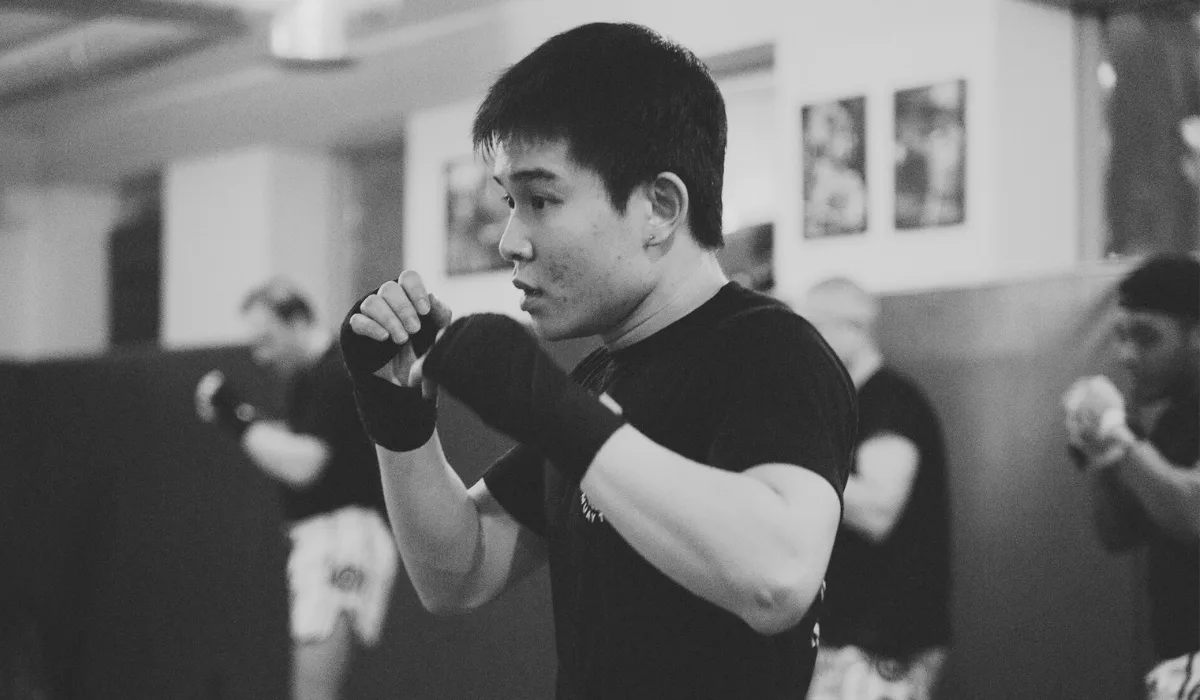
How To Return Safely To Muay Thai After An Injury?
If you are injured and want to return to Muay Thai, the answer is usually not to avoid loading your body.
It is to load your body better.
That may sound strange if you are dealing with a sore knee, cranky shoulder, irritated back, hip pain, or an old injury that keeps flaring up every time you try to train again. Most people assume rehab means backing off completely, doing a few gentle stretches, maybe adding some band exercises, and waiting until the pain disappears before they return to “real” training.
But that is not how the body becomes ready for Muay Thai again.
Why Muay Thai Demands More Than Rest
Muay Thai is a loaded sport. Every punch, kick, knee, elbow, clinch exchange, defensive movement, and footwork adjustment asks your body to absorb, redirect, and produce force. If rehab never prepares you for those demands, you may feel better at rest but still break down once you return to class.
That is why injury rehab needs load.
The key is applying the right amount of load, in the right way, at the right time.
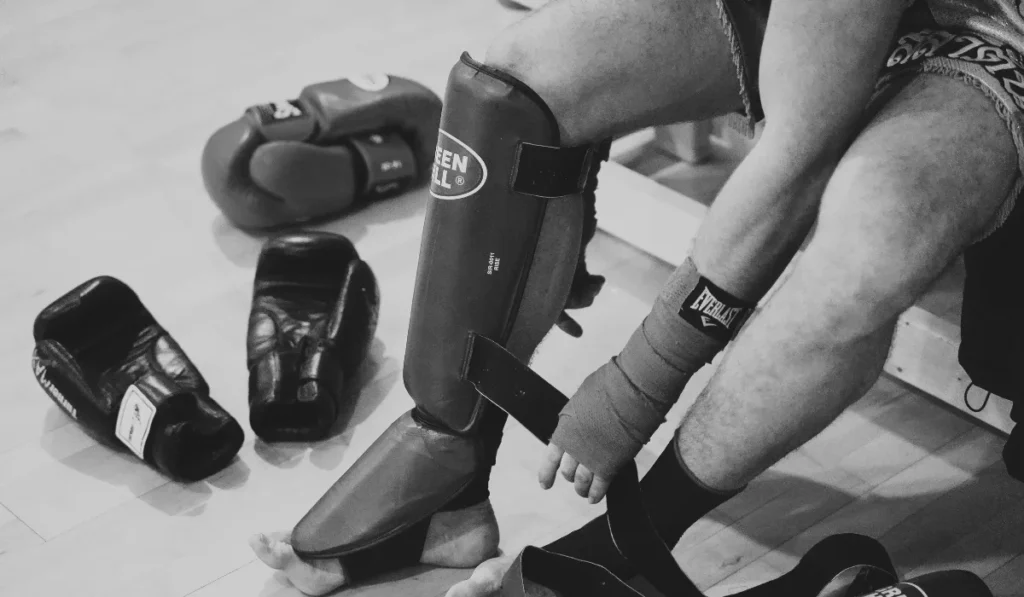
Performance and Injury Prevention Are Not Separate Goals
A lot of people separate training into two categories: performance and injury prevention. Performance means getting stronger, faster, more powerful, more technical, and better conditioned. Injury prevention means doing corrective exercises, mobility drills, activation work, or isolated strengthening to avoid getting hurt.
At a surface level, that separation makes sense. But in practice, the qualities that improve performance and the qualities that improve resilience overlap heavily.
- A body that distributes load well usually performs better.
- A body that transfers energy efficiently usually strikes better.
- A body with more positional options usually moves better.
- A body that tolerates stress well usually recovers better.
- A body with fewer unnecessary compensations usually flares up less often.
These are not separate goals. They are the same process viewed from different angles.
How Load Travels Through a Strike
1. The Round Kick
Take a round kick as an example. If your standing foot, hip, trunk, and shoulder all coordinate well, the kick feels smoother and more powerful. Force travels through the body instead of getting stuck in one place. That helps performance.
But it also helps resilience. If your hip cannot contribute, your lower back may take more strain. If your standing leg cannot control rotation, your knee may become the weak link. If your trunk cannot manage the force of the kick, your shoulder or neck may tense up to create stability. Over time, one area keeps paying the price for a coordination problem somewhere else.
2. The Punch
The same idea applies to punching. A punch is not just your arm. It is a chain of force from the floor, through the legs, hips, trunk, shoulder blade, and fist. When that chain coordinates well, your punches are sharper and more efficient. When it does not, your shoulder, elbow, wrist, or neck may absorb stress they were not meant to handle repeatedly.
What a Good Muay Thai Return-to-Training Plan Actually Looks Like
This is why returning to Muay Thai after injury should not be built around avoiding every uncomfortable movement forever. It should be built around gradually restoring your ability to handle the movements the sport actually requires.
That does not mean rushing back into sparring, max-effort pad rounds, hard clinching, or high-volume kicking before you are ready. It means using progressive training to rebuild capacity.
Early Rehab
In early rehab, loading might be simple and controlled. You may need to restore basic strength, range of motion, balance, and confidence around the injured area.
Progressive Sport-Specific Loading
As your tolerance improves, the exercises should start to look more like the demands of Muay Thai. That progression might include:
- Rotational control
- Single-leg stability
- Trunk stiffness and relaxation
- Deceleration
- Footwork
- Striking mechanics
- Eventually, contact or higher-speed work
The Real Goal: A Body With Options
The point is not to move perfectly. Perfect movement does not exist in a live sport. Muay Thai is dynamic, messy, reactive, and unpredictable. You will not always be in an ideal position. Your opponent, partner, fatigue, timing, and distance will constantly change the task.
The real goal is to build a body that has options.
You want to be able to:
- Absorb force in different stances
- Rotate without dumping everything into your back
- Kick without irritating your hip or knee
- Frame and clinch without your neck or shoulder flaring up
- Change direction without feeling fragile
That requires more than generic “prehab.” It requires training that challenges the affected movement patterns in a progressive way.
Common Injury Patterns and What They Actually Need
If your shoulder hurts when punching, the answer is not always endless band pull-aparts. You may need to look at how your ribs, trunk rotation, scapular control, guard position, and punching volume interact.
If your knee hurts when kicking, the issue may not be the knee alone. It may involve foot position, hip rotation, stance width, balance, or how quickly you increased training volume.
If your back tightens up after every class, you may need better load distribution between your hips, trunk, and legs, not just more stretching.
Coaching and Programming Make A Real Difference
A good return-to-training plan should bridge the gap between rehab and sport. It should respect pain without being ruled by fear. It should reduce unnecessary stress on irritated tissues while progressively exposing them to more work. It should build strength, coordination, conditioning, and technical skill together.
Because the line between performance training and pain reduction is often much thinner than people think.
When your body coordinates well, you move better. When you move better, you waste less energy. When you waste less energy, you can train longer and recover better. When no single area is repeatedly forced to absorb more than its share, you become more durable.
Return to Muay Thai Training After Injury in Toronto
At Montrait Muay Thai, we have built a structured approach to helping members return to training after injury — one that does not sideline you indefinitely or rush you back before you are ready. Kru Ben Lee works directly with members across the Foundations and Advanced programs, applying the same biomechanics-grounded framework outlined in this post.
Whether you are dealing with a recurring flare-up or coming back after time away, the programming at MMT is built to meet you where you are and move you forward progressively.
Book a no-sweat consultation call with us to talk through where you are at and what a return-to-training path looks like for you. There is no pressure and no commitment, but an opportunity to learn about how our training can help you reach your fitness goals.
About Kru Ben Lee
Kru Ben holds a BASc in Mechanical Engineering and an MSc in Biomechanics from the University of Waterloo, and has trained in Muay Thai since 2010. His research on low back injury prevention and Muay Thai performance is published on ResearchGate.