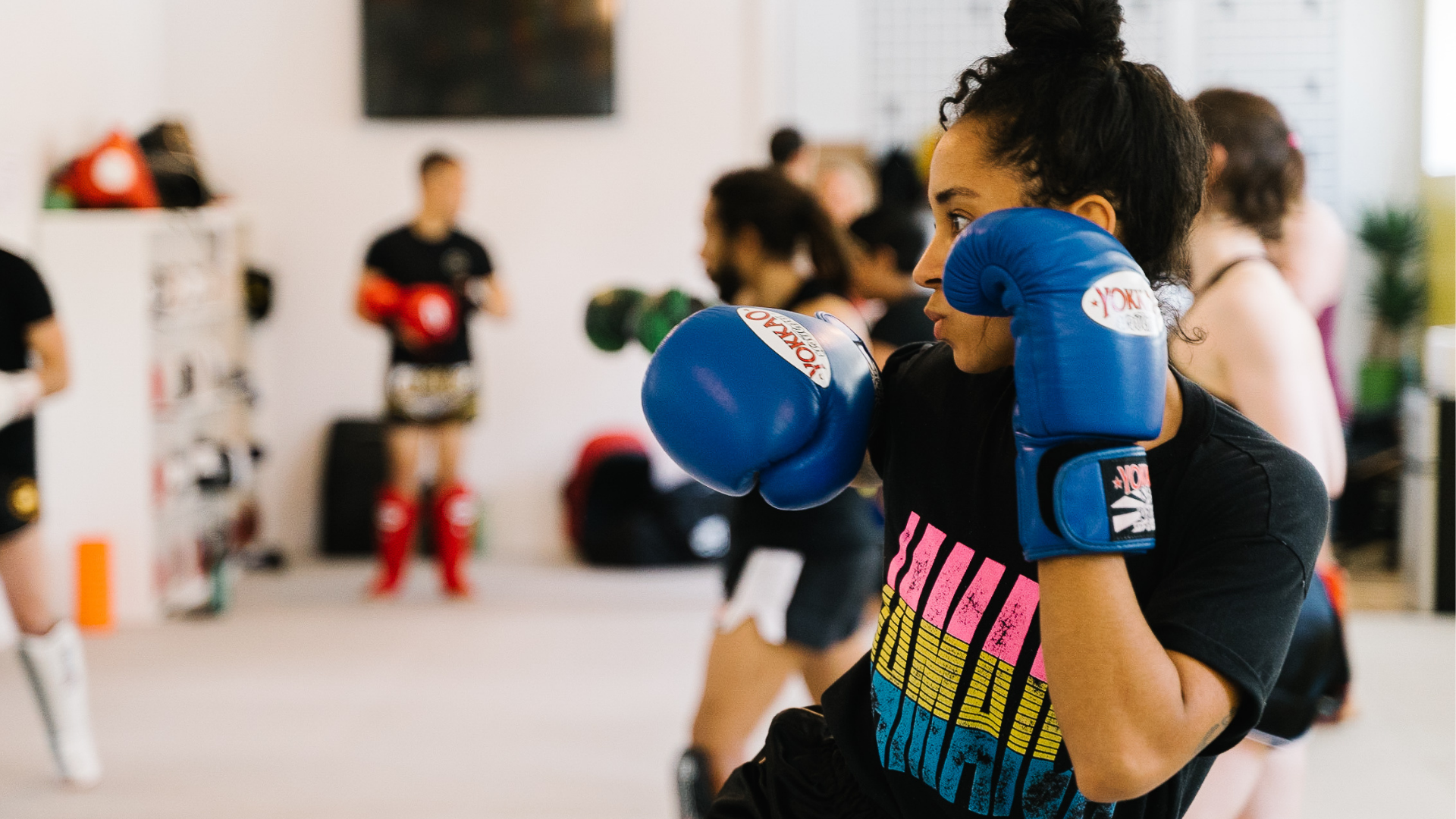
If you are searching “common Muay Thai injuries,” you are probably not looking for a reason to avoid training.
You are looking for a reason to start intelligently.
Maybe your back already gets tight from sitting. Maybe your shoulders feel stiff after work. Maybe your knees ache when you run, your shins flare up with impact, or your wrists feel uncomfortable when you do push-ups. You want to learn Muay Thai, but you do not want to turn a manageable ache into a bigger problem.
That concern is reasonable.
Muay Thai involves punching, kicking, kneeing, elbowing, rotating, balancing, impact, and fatigue. Injuries are not random. They usually happen when the body is asked to produce or absorb more force than it can currently control.
If any symptoms are sharp, worsening, radiating, associated with numbness, or affecting daily life, get assessed by a qualified healthcare professional before continuing training.
The goal is not to avoid all risks. The goal is to understand where risk comes from and make the body stronger in the right order.
Here are 5 Common Muay Thai Injuries in Beginners And How To Prevent Them:
1. Back Pain
Back pain is one of the most common concerns for adults starting Muay Thai.
Round kicks, punches, knees, and defensive movements all involve rotation. If the hips do not rotate well, especially into hip internal rotation, the low back often makes up the difference. Over time, that can turn the back into the “compensation zone.”
Poor core endurance can also contribute. This is not just about having visible abs or being able to hold a plank. It is about whether your trunk can maintain position, breathing, and control over repeated rounds. When fatigue builds, the ribs may flare, the pelvis may shift, and the low back may absorb force that should be distributed through the hips and trunk.
How to Treat:
Reduce provocative movements: Pull back on high kicks, hard rotation, and any movement that directly triggers symptoms.
Rebuild gradually: Reintroduce with lower-intensity drills before returning to full training load.
Identify the root cause: Resting until pain calms down is not enough. Understand why the back was overloaded in the first place.
How to Prevent:
Hip Mobility: Build usable hip rotation, especially internal rotation, so the low back is not compensating for a stiff hip.
Core Endurance: Train the trunk to maintain position, breathing, and control across multiple rounds, not just in isolation.
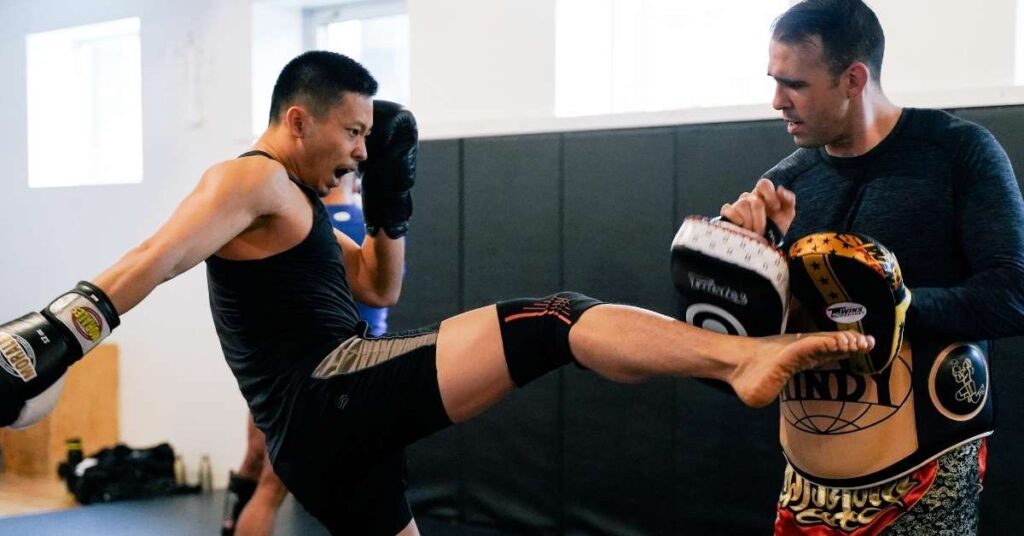
Kick Mechanics: Learn to kick through the hip instead of twisting through the low back.
Load Management: Progress kicking height, power, and volume gradually rather than all at once.
2. Neck and Shoulder Pain
Many beginners already spend hours in rounded positions: sitting at a desk, driving, cooking, typing, or looking down at a phone.
Then they enter a Muay Thai stance: hands high, chin tucked, elbows in, shoulders active. This position is important defensively, but it can exaggerate existing neck and shoulder tension.
If the upper back is stiff and the shoulder blades do not move well, the rotator cuff may have to work from a poor base. The shoulder is like a crane mounted on a platform. If the platform is unstable, the moving arm has to compensate.
How to Treat:
Reduce punching volume: Pull back if symptoms are increasing rather than pushing through.
Avoid loading an unstable shoulder: Stay off heavy bag and pad rounds if the shoulder feels pinchy, weak, or unstable.
Restore range first: Comfortable shoulder range, upper-back motion, and neck control should come before adding more speed or power.
Seek assessment: Persistent pain, weakness, numbness, or pain that disrupts sleep warrants professional evaluation.
How to Prevent:
Posture Tolerance: Build the capacity to hold a guard position without shrugging or tensing the neck.
Upper Back Strength: Strengthen the upper back, rotator cuff, and shoulder blade control to give the shoulder a stable base.
Punch Mechanics: Learn to support punching through the trunk, hips, and footwork rather than relying on the shoulder alone.
Progressive Load: Build punching mechanics gradually before increasing speed or power.
3. Ankle Pain, Knee Pain, and Shin Splints
Footwork, skipping, kicking, pivoting, and conditioning all expose the lower body to repetitive impact.
The foot and ankle are the first contact points with the floor. If they do not absorb and redirect force well, stress travels up the chain into the shins, knees, hips, or back.
Balance matters here. Not just standing on one leg, but controlling pressure through the foot while moving. If the foot collapses, stays too rigid, or cannot adapt to the floor, the shin and knee may take more load than they can tolerate.
Shin splints often happen when training volume increases faster than the tissues can adapt.
How to Treat:
Reduce impact volume: Modify skipping, running, jumping, and high-repetition kicking while symptoms are present.
Ice irritated shins: Apply ice if it helps manage symptoms during the acute phase.
Reintroduce load gradually: Do not return to full volume until the area can tolerate it without flaring.
Seek assessment for acute injuries: If you cannot bear weight, the joint feels unstable or numb, pain is directly over bone, or symptoms are severe, get assessed professionally.
How to Prevent:
Foot and Ankle Strength: Build the capacity to push through the floor without collapsing inward or gripping excessively.
Single-Leg Balance: Improve control under load, not just static standing.
Load Management: Progress skipping, pivoting, and kicking volume slowly to give tissues time to adapt.
Footwear: Good footwear outside the gym matters if daily walking or work demands already irritate your shins or knees.
4. Sprained Wrist
Wrist injuries often happen when beginners punch with poor alignment or hit harder than their structure can support.
A punch is a force-transfer problem. Power should move from the floor, through the legs, hips, trunk, shoulder, arm, and fist. If the wrist bends on impact, the force does not travel cleanly. The wrist becomes the weak link.
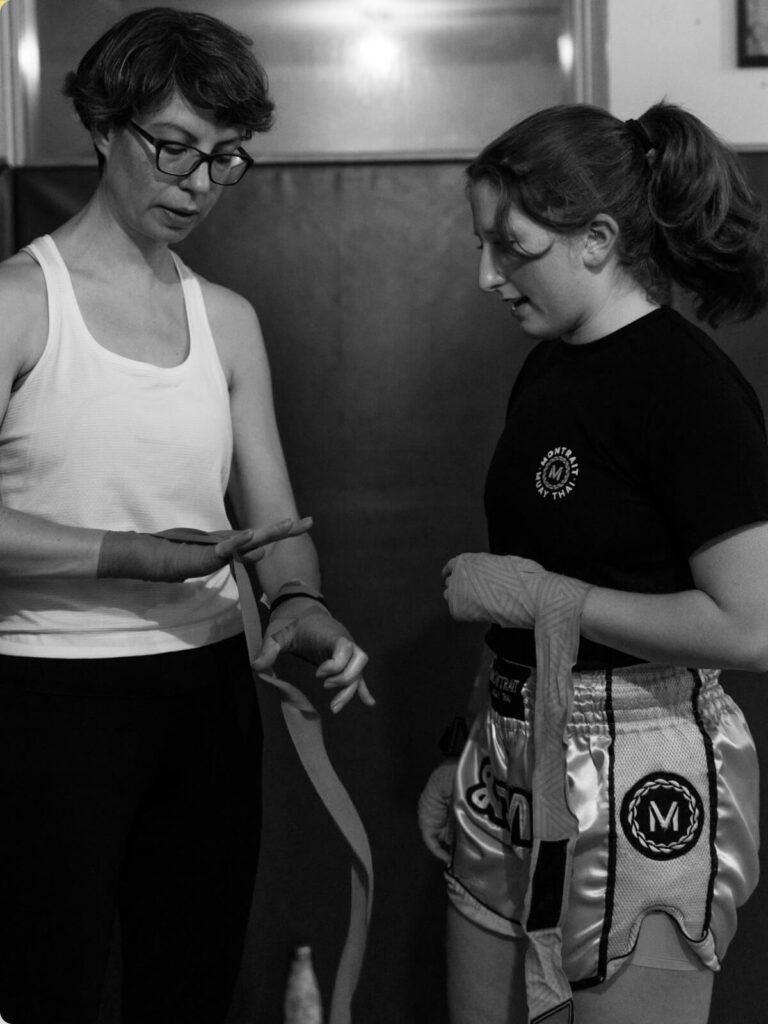
Wraps and gloves help, but they do not replace technique.
How to Treat:
Stop punching through wrist pain: Reduce impact work and avoid heavy bag or pad rounds until the wrist can tolerate basic loading.
Early care for acute sprains: Rest, ice, compression, and elevation in the first few days.
Seek assessment: Major swelling, bruising, loss of grip strength, deformity, numbness, or pain that does not improve warrants professional evaluation.
How to Prevent:
Fist Position and Alignment: Learn correct wrist alignment and knuckle contact before increasing power.
Hand Wraps and Gloves: Use properly fitted gloves and hand wraps consistently.
Earn harder punching: Progress contact through clean mechanics, not enthusiasm.
5. Concussion
Concussion is the injury many beginners worry about most when they hear “combat sport.”
That concern should be respected.
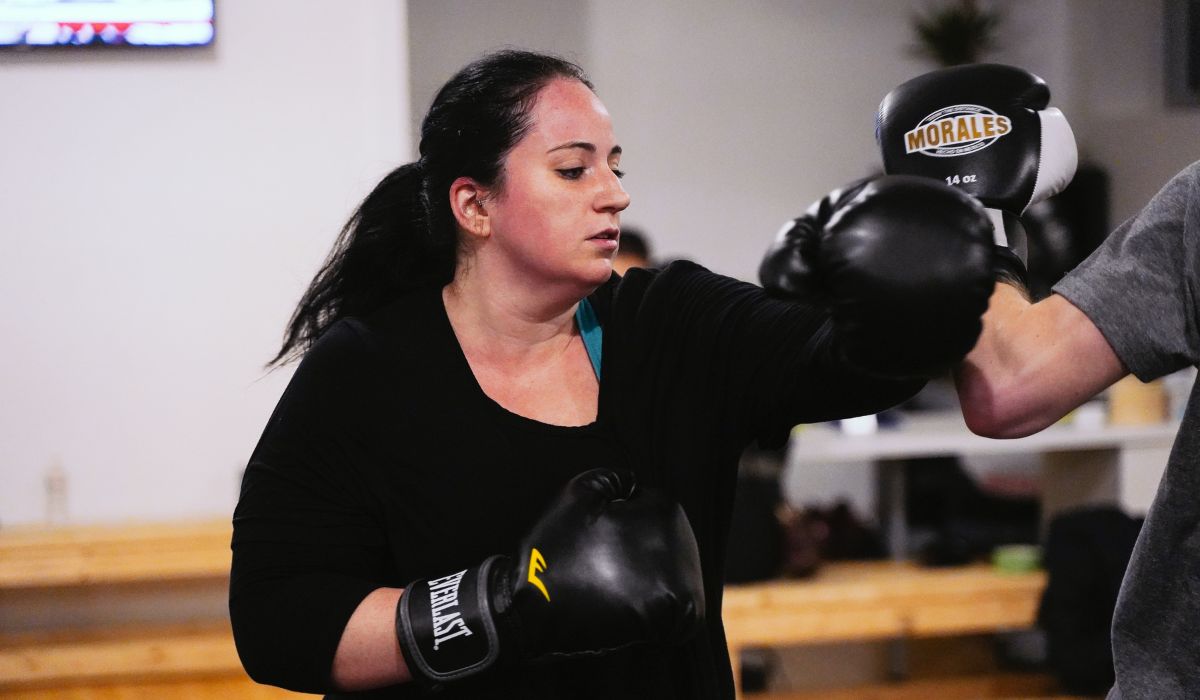
At Montrait Muay Thai, beginners do not spar on day one. Sparring only occurs at the yellow shorts level, after students have developed enough technical control, defensive awareness, and coach approval to participate more safely.
Concussion risk is not about toughness. It is about exposure, control, defensive skill, decision-making, and preparation.
Reactive neck stability also matters. The neck helps control how the head moves when force is applied. This does not make anyone concussion-proof, but better neck strength, posture, awareness, and reaction can be part of a broader risk-reduction strategy.
How to Treat:
Stop immediately: If a concussion is suspected, stop training that day. Do not return to sparring, drilling, or conditioning.
Monitor symptoms: Headache, dizziness, nausea, light sensitivity, balance issues, fogginess, slowed thinking, or memory problems all warrant attention.
Supervised return: Return to sport should be gradual and managed by a healthcare provider.
How to Prevent:
Delay sparring: Sparring should be earned technically, not handed to beginners on day one.
Build defensive skill first: Distance control, composure, and reaction come before unpredictable contact.
Neck Stability: Strengthen and build awareness in the neck as part of broader injury-reduction work.
Controlled sparring environment: Keep sparring supervised, controlled, and appropriate to the athlete’s current level.
How Montrait Muay Thai Reduces These Risks
The biggest mistake beginners make is starting with intensity before understanding their mechanics.
This is why our Toronto Muay Thai gym developed the Initial Performance Session (IPS) and Foundations curriculum: to help reduce injury risk by giving each new student an individualized starting point.
During the IPS, instead of assuming every beginner moves the same way, we look at how you rotate, balance, brace, breathe, strike, and tolerate basic Muay Thai positions. This helps identify root contributors behind existing aches and pains, rather than only reacting to symptoms.
From there, the 1-on-1 Foundations program builds technique progressively. You learn stance, footwork, punching mechanics, kicking mechanics, defense, balance, and control before being expected to keep up in a faster group environment. If your hips are limiting your kick, we address it. If your shoulders are tense in stance, we coach it. If your wrists need better punching structure, we slow the movement down. If your conditioning drops your technique, we progress volume carefully.
Muay Thai should challenge your body, not punish it for being unprepared.
When the starting point is assessed and the progression is coached, beginners can build skill, confidence, and resilience at the same time.
As women continue to break barriers and shatter stereotypes, MMA offers an empowering platform for personal growth, physical fitness, and self-defense. Learning MMA provides women with an opportunity to develop confidence, resilience, and mental strength. Mixed Martial Arts (MMA) has gained immense popularity in recent years, transcending gender barriers and attracting women from all walks of life. While some may perceive MMA as a male-dominated sport, women are increasingly discovering the numerous benefits it offers. As a MMA gym in Downtown Toronto, we host women’s only MMA workshops throughout the year that are focused on self-defense skills. If you’d like to book a spot for our next workshop, send us a DM.
Here are 4 amazing benefits for women from learning MMA:
1. Empowerment and Self-Defense
MMA training in Toronto helps women develop a sense of strength, both physically and mentally. Through learning self-defense techniques, you’ll gain the skills and confidence necessary to protect yourself and others in challenging situations. Martial arts teaches practical skills such as striking, grappling, and submissions, equipping women with effective tools for self-defense. This newfound confidence often extends beyond physical encounters, empowering women to assert themselves in various aspects of their lives.
2. Physical Fitness and Health
MMA is an intense and diverse sport that incorporates various martial arts disciplines such as boxing, kickboxing, Brazilian Jiu-Jitsu, and Muay Thai. These workouts improve overall fitness levels, enhance agility, and build core strength. Regular MMA training in Toronto can also help you achieve fitness goals, increase muscle tone, and improve cardiovascular health. At the same time, the physical demands of MMA training can positively impact mental health by reducing stress, boosting mood, and increasing energy levels.
3. Increased Confidence and Mental Resilience
Overcoming physical challenges and pushing personal boundaries fosters mental resilience, leading to increased self-esteem and self-belief. The rigorous training sessions require discipline, focus, and perseverance, all of which contribute to mental strength. Through MMA, you’ll learn to embrace their capabilities, develop mental toughness, and overcome self-doubt. These attributes often transcend the training environment and translate into everyday life, allowing women to tackle challenges with newfound confidence.
4. Building a Supportive Community
In a typically male-dominated sport, female practitioners often find camaraderie and solidarity among their peers. Training in a group setting fosters a sense of belonging, as women motivate and support each other throughout their journey. The shared experiences and challenges create strong bonds and lasting friendships. This supportive community extends beyond the training facility, providing a network of like-minded individuals who understand the unique journey of learning MMA as a woman.
At Montrait Muay Thai, we are big supporters of women empowerment. We think of our gym like a community of Muay Thai enthusiasts who support and help each other grow stronger. Our Muay Thai classes in Downtown Toronto are conducted in a welcoming manner and are 100% safe for people of all ages, genders, and ethnicities. Join us for a trial class and see it for yourself!
Most people think improvement comes from training harder, but that’s only half the story. What you do after class is just as important as the rounds you put in on the pads. Like any other sport, Muay Thai training can lead to overtraining and lack of recovery can lead to fatigue, muscle damage, and irritability.
Recovery is the phase where your body does the real work. Muscles that were broken down during pad rounds and heavy drills repair themselves and grow stronger. Energy stores like glycogen get replenished, which helps you push through the next session with higher intensity. Even your nervous system resets, sharpening reaction time and mental focus.
Here are 6 ways you can speed up recovery after a Muay Thai class
1. Stretch and relax your muscles
Stretching is the fastest way to recover from an intense session as it increases blood flow to the muscles. Focus on breathing deep and slow and hold every stretch for 60 to 90 seconds. You can also use SMR techniques with a foam roller, tennis ball, or lacrosse ball to release knots in the muscles and improve blood flow.
2. Take a cold shower or bath
Nothing better than an ice cold shower or bath. In winter months, even a cold swimming pool will work. For summers, fill up your bathtub with cold water and add a couple ice bags. Maintain the temperature at 10-12 degree Celsius. Sit in the water for 6-12 minutes and you’ll feel your muscles relax. If you’re taking a shower, set at the coldest setting and shower for around 10 minutes.
3. Engage in light intensity workouts
If you want to keep up the metabolism or don’t want to break the habit of working out, engage in light intensity workouts like yoga, brisk walking, swimming, or light cardio. Keeping a 7-day workout routine will keep you away from cheat meals, making it a great idea for those trying to lose weight.
4. Focus on eating the right foods
Eating the right nutrients will take your fitness journey across the finish line. If you’re training or fighting, include whole grains in every meal to replenish your glycogen reserves. Protein and healthy fats should still be a crucial part of your diet. Eat meals every 2-3 hours and include supplements like creatine, cod liver oil, magnesium, and protein powder.
5. Keep your body hydrated
Water makes 75% of your muscles, so if you’re dehydrated they’ll take a very long time to recover and you’ll feel fatigued even after rest. When training for Muay Thai in Toronto, you sweat a lot, so replenishing your fluids and electrolytes is crucial. A simple trick is to add salt and water to a couple glasses of water and drink them throughout the day.
6. Get a full night’s sleep
Muscles relax only during the REM phase of your sleep, which makes getting 7-9 hours of sleep every night extremely important. If you don’t get a good night’s sleep, your muscles will remain sore and you’ll feel fatigued. It will also enhance your performance and give you a calm mindset while training.
Working with experienced trainers adds to your recovery process. We at Montrait Muay Thai in Downtown Toronto alternate periods of intense workout and recovery, so our students are well-rested and ready to level up with confidence. Give us a call today or visit us at our location for a gym tour.
Muay Thai, the martial art of eight limbs, is a physically intense exercise. When training for muay thai, you learn to use your hands, elbows, knees, and chin as offensive weapons. You’ll be sweating in no time! But did you know that it is an excellent stress buster too? It makes you more confident, self-aware, and happy.
If you’re looking for a sport that helps you both physically and mentally, join us at Montrait Muay Thai in Downtown Toronto!
Here are top 5 reasons why Muay Thai is the ultimate stress buster:
1. Best of all destructive therapy
If you’ve watched videos of people destroying plates, mugs, and electronics and want to do it, muay thai’s exactly what you need. Whether it’s pent-up anger, stress, or sadness, martial arts has proven to be an effective therapy. All these trigger your body’s fight or flight response. Muay Thai offers an outlet to all these negative emotions and also promotes oxytocin and serotonin production, your natural feel good hormone.
2. Helps you sleep better
Most of us spend the majority of our days working behind a screen. By the time you finish work your mind is tired but your body is still energised. Muay Thai workouts offer a good balance of aerobic and anaerobic exercises. It’ll drain all excessive energy stored in your body. When your body’s tired and you’re relaxed mentally, you’ll sleep throughout the night.
3. Easier to socialise and make friends
Ever tried making a friend only to realise you’ve got nothing in common? At Montrait Muay Thai, we’re a tight-knit family. You’ll make friends in your very first class! Muay Thai helps you break the barrier because you get to interact with people you’ve got something in common with.
Many of our workouts and techniques are practised with partners, which gives you another chance to foster a strong friendship.
4. Reduces muscle tension
With stress comes muscle tension, eventually leading to a lower quality of life. You’ll find yourself feeling restricted all the time. It can also cause muscle cramps or soreness in the long run. At Montrait Muay Thai in Downtown Toronto, our classes are separated into three parts, the first one being warm-up. It’ll not only relax your muscles but also increase blood oxygen and nutrient flow throughout the body.
5. Builds psychological resistance
Respect, perseverance, and patience are three important pillars of Muay Thai. You have to stay calm while learning new techniques and workouts. Even during partner training, you’ll have to be patient and guide each other throughout the workout. This helps build psychological resistance by lowering temper and rash decisions.
The best part about learning Muay Thai is that anyone can learn it! Whether you’ve been training for years or just starting out, you’ll have fun. And more importantly, build mental and physical strength.
Train at Montrait Muay Thai in Toronto
We focus on fundamentals first, so you feel strong and equipped with the right techniques.
At Montrait Muay Thai, every student begins with an Initial Performance Session (IPS). One of our coaches will assess how your body moves, talk about Muay Thai and your training goals.
From there, you’ll work with a coach in private sessions to learn the fundamentals at your own pace.
By the time you join group classes, you’ll feel confident in your form, technique, and understanding of Muay Thai.
Is Muay Thai a good option for people with high stress jobs and burnout?
Yes, if you start with the right pace. Muay Thai forces focus, releases tension, and builds routine. Most people sleep better and feel more confident within weeks. Train two to three times weekly and keep intensity moderate to support muscle recovery.
Does Muay Thai help with stress, or does it make anxiety worse at first?
It helps long term, but anxiety can spike early. New drills, loud pads, and fast pacing can feel intense. That fades as you learn fundamentals and your body adapts. If you have a tendency to feel anxious, 3-6 months of private Muay Thai coaching can help you ease into the sport.
Do you need private sessions before group classes, or can you start in a beginner class?
We recommend private sessions before and here’s why. Private training lets us fix stance, guard, footwork, and basic strikes early. At Montrait Muay Thai, you begin with an Initial Performance Session, then one on one coaching. Once technique looks solid, you join group classes or continue with private training.
How do you avoid injury and overwhelm when you start Muay Thai?
Prioritize technique over power. Warm up well, wrap your hands, and use proper gloves. Tell your coach about old injuries early. Take breaks when your form slips. Increase intensity only after you feel comfortable with basics and pacing.
Are you up for a fitness challenge that is both terrifying and thrilling? If you’ve watched Kickboxer, Ong Bak, or The Raid, you would have seen this brutal sport in action. Muay Thai in Toronto is all about sparring and competition, while other martial arts are usually combat simulations and theory played out in a controlled environment. It also makes up for a great aerobic workout and will help you loose those resistant fat around your stomach and thighs. Much needed when options are limited outdoors.
Muay Thai is an intense sport that engages all hands, shins, knees, and elbows but it isn’t difficult for beginners to train and learn the fundamentals. As a Toronto Muay Thai gym, we understand that starting a new sport is overwhelming and prepared this guide to help you ease into it. We also host free Muay Thai classes for women from time to time, so you can learn the sport in a safe, welcoming atmosphere.
History of Muay Thai
Muay Thai is a standing martial arts style with roots leading back to 13th century Thailand when it was mandated as military training. You can trace it back to the Sukhothai dynasty and it was made Thailand’s national sport by the Rattanakosin Kingdom (18-20 century). Rooted in the traditional Thai martial art of Muay Boran, Muay Thai also reflects influences from British boxing, which introduced concepts like structured rules, boxing rings, and gloves. This fusion gave rise to the distinctive style characterized by powerful strikes using fists, elbows, knees, and shins, earning it the moniker “the art of eight limbs.”
In contemporary combat sports, Muay Thai remains a staple, with UFC legends like Anderson Silva, Edson Barboza, and Joanna Jędrzejczyk incorporating its techniques into their arsenal for its speed, precision, and versatility. Today, Muay Thai has become a staple in martial arts and is growing in popularity as a self-defence technique. Come try it out at our gym in downtown Toronto!
Understanding the basics of Muay Thai training
Learning Muay Thai as a beginner is like learning to walk again. Not kidding! Your stance and posture is very important but so is your mental strength. The way you hold your arms against your body to protect yourself is different from boxing.
In boxing, you only have your hands to protect you but in Muay Thai in Toronto you have 8 weapons to use – Punch, Kick, Knee, and Elbow (2 each). While mastering this awesome sport takes time, the beauty lies in the benefits it offers!
When it comes to Muay Thai training, be ready to SWEAT A LOT. Whether you want to learn Muay Thai to break your sedentary lifestyle or want to compete professionally, the benefits are endless. It teaches self-defense, makes you calmer, and makes you self-confident. Also, there’s a lot of kicking and punching and that’s absolutely fun! Since it has a learning curve, at our gym we recommend new students to take a couple personal training sessions to get posture, form, and technique correct and then join our group classes.
Is Montrait Muay Thai in Toronto the right fit for you?
We take pride in teaching the most ancient techniques of Muay Thai that are rooted in its culture but also adapt them to your fitness goals. Like any other martial art and combat sports, injury is inevitable but with correct training, you can learn how to avoid mistakes. If you’re unsure about Muay Thai being the right fit for you, you can book a personal training class with us! After your class, be sure to ask about our special offers for new students only!
Picking out a good gym
Finding the right gym is the single most important decision you have to take. You want to learn at a gym that teaches you the techniques and not some watered down version. Since you’re a beginner, find an academy that conducts foundation classes. All students will start at the same level and you’ll learn so much better that way.
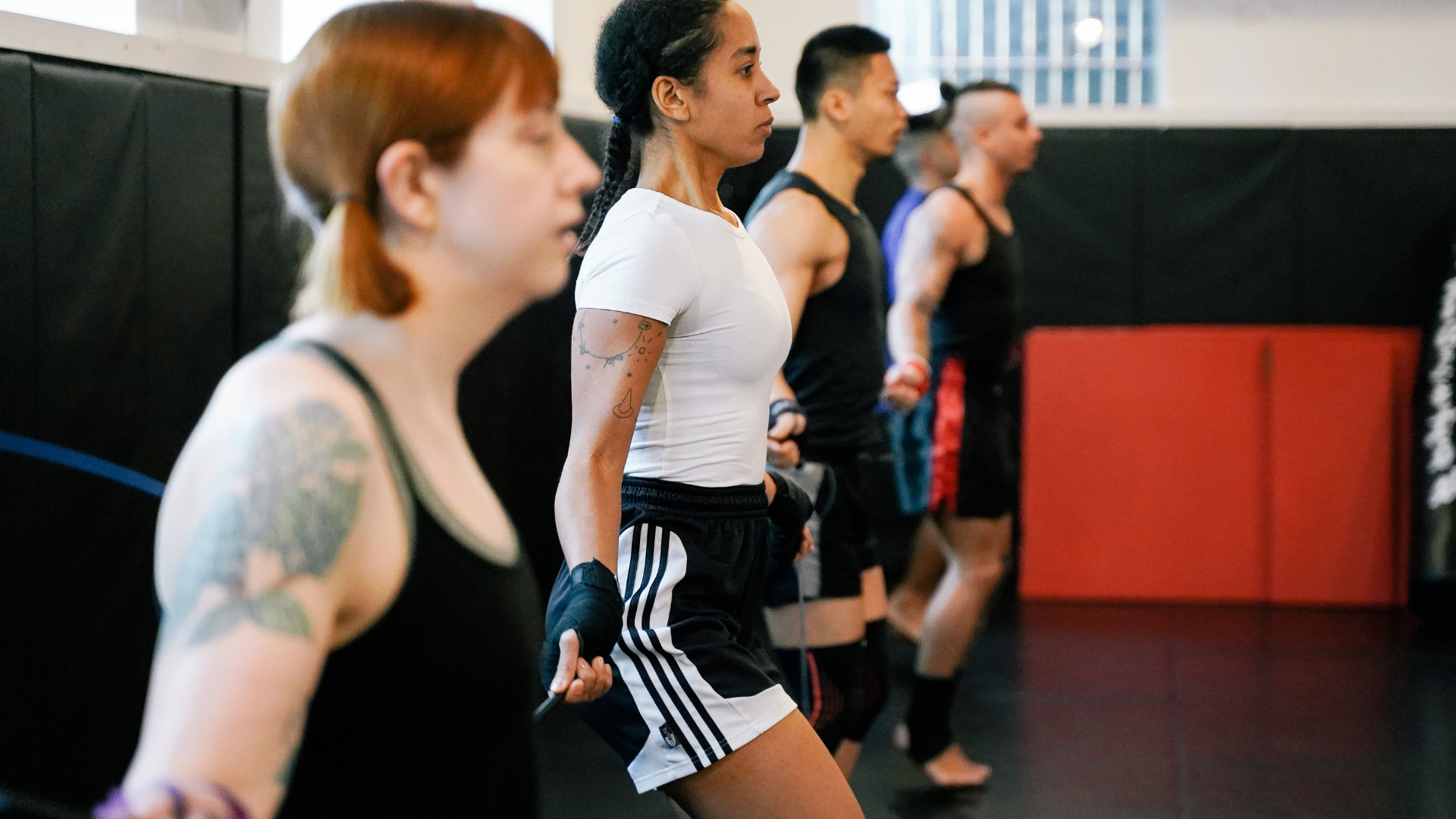
Good thing is Montrait Muay Thai in Toronto offers foundation classes! Each class is 90 minutes long and our instructors take you through the fundamentals. The first 30 minutes, you’ll be doing a set of body weight exercises, plyometrics, and speed agility drills. In the next 30 minutes, your instructor will demonstrate technical drills followed by the students practicing them. The class finishes with partner pad work and/or drilling!
Don’t have a partner to bring with you? Don’t worry because we can easily pair you with another student from the class.
Train at Montrait Muay Thai in Toronto
We focus on fundamentals first, so you feel strong and equipped with the right techniques.
At Montrait Muay Thai, every student begins with an Initial Performance Session (IPS). One of our coaches will assess how your body moves, talk about Muay Thai and your training goals.
From there, you’ll work with a coach in private sessions to learn the fundamentals at your own pace.
By the time you join group classes, you’ll feel confident in your form, technique, and understanding of Muay Thai.