How Is Muay Thai Different From Its Predecessor Muay Boran?
If you’ve ever been intrigued by the world of martial arts, you’ve likely come across Muay Thai and Muay Boran. Many people hear these names but struggle to tell them apart. These two Thai fighting arts share a rich history and cultural significance, yet they are distinct in many ways.
Let’s unravel the complexities and nuances that set these two martial arts apart. From their origins to techniques, rules, and cultural impact, we’ll explore every facet to give you a wholesome understanding.
1. Origins and History
Muay Thai: The Modern Marvel
Muay Thai, often referred to as the “Art of Eight Limbs,” is a martial art that has gained international recognition. It originated in the mid-18th century and was influenced by military training. As Thailand entered periods of national consolidation, formal rules were introduced to protect fighters and standardize competition. Gloves replaced rope bindings in the early 20th century, rounds were timed, and weight classes were created. This transition marked Muay Thai’s shift from battlefield preparation to regulated sport.
Over the years, it has evolved into a competition-based sport with specific rules and regulations. It is also practiced as an intense workout to help you lose fat in targeted areas of your body.
Muay Boran: The Ancient Ancestor
Muay Boran, on the other hand, is the predecessor of Muay Thai and dates back to as early as the 16th century. It was developed for self-defense and used in warfare. Unlike Muay Thai, Muay Boran is not confined to a set of standardized rules, making it a more “free-form” martial art. Historically, different regions developed their own tactical identities. Fighters were trained to defend villages and kingdoms, and techniques that prioritized survival, structural damage, and rapid incapacitation were practiced more.
2. Techniques and Styles
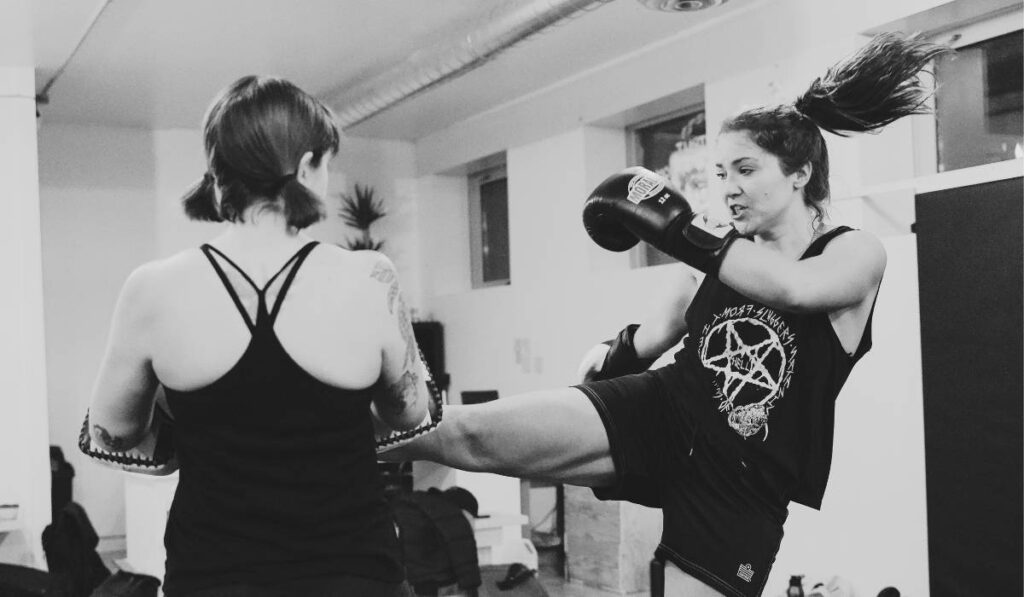
While Muay Thai focuses on striking techniques using the fists, elbows, knees, and shins, Muay Boran encompasses a broader range of techniques, which include throws, joint locks, and even strikes to vulnerable areas like the eyes or throat. Styles can vary significantly depending on the region, such as Muay Chaiya, Muay Korat, and Muay Lopburi.
Clinch work plays a major role in Muay Thai, where fighters manipulate posture to land knees and off-balance opponents. In contrast, Muay Boran allows sweeps that aim to damage knees or ankles and uses standing grappling to break structure quickly.
3. Rules and Regulations
Muay Thai is governed by a specific set of rules, including weight classes, round lengths, and permissible strikes. Fighters wear gloves and shorts and compete in a ring.
Professional Muay Thai bouts in Thailand typically consist of five 3-minute rounds with two minute breaks. Judges score based on effective strikes, balance, dominance in the clinch, and visible impact. Clean knees and elbows score highly, especially when they disrupt posture or clearly affect an opponent.
Fouls include headbutts, groin strikes, biting, and attacks to the back of the head. Referees can issue warnings, deduct points, or stop a fight for safety. Medical checks before and after bouts are mandatory in regulated promotions.
On the other hand, Muay Boran has fewer rules and restrictions. Traditionally, fighters’ fists were wrapped in hemp rope, and the fighting area was less defined. Because Muay Boran developed for combat rather than sport, it includes techniques that are illegal in modern Muay Thai competition. These may involve joint destruction, spinal attacks, and strikes to the throat or groin. There is no standardized scoring system and shouldn’t be turned into a fight.
4. Training and Practicing
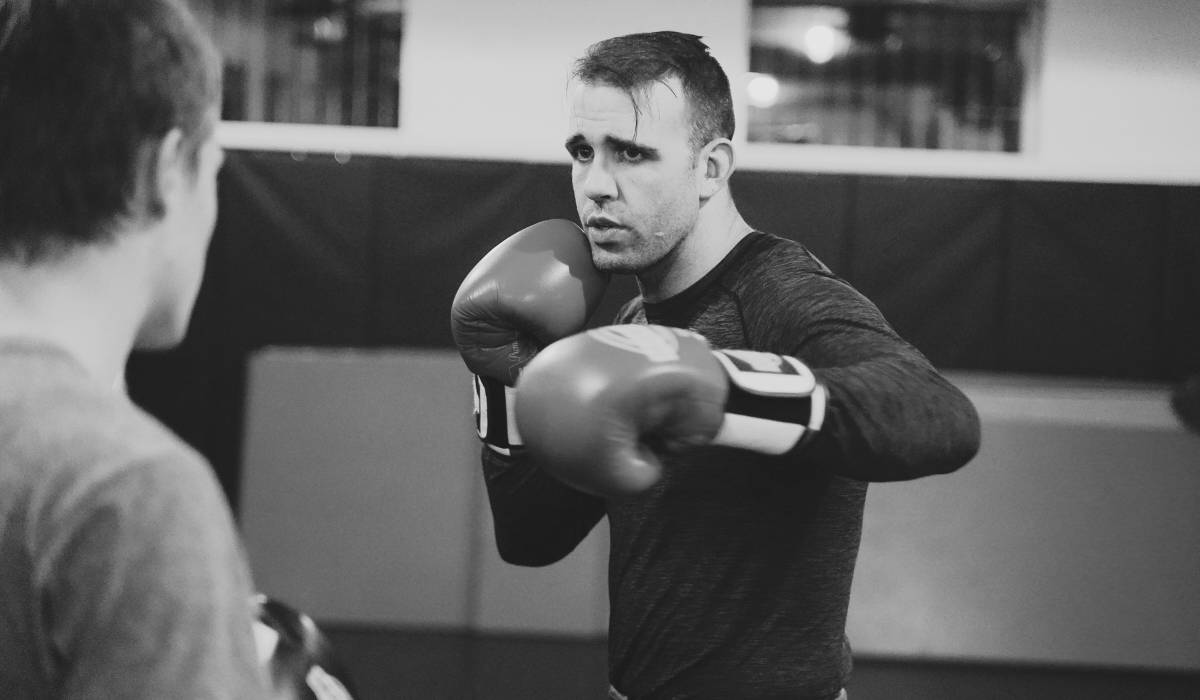
Training in Muay Thai is rigorous and structured, focusing on physical conditioning, pad work, and sparring. It’s common to see Muay Thai gyms equipped with heavy bags, pads, and a ring for sparring. Training in Muay Boran is less formalized but equally intense. It often includes practicing with wooden dummies and emphasizes real-world applications of techniques.
While both martial arts share a focus on striking and originate from Thailand, they diverge significantly in their approach to techniques, rules, and training. Muay Thai is more streamlined and sport-oriented, whereas Muay Boran is more comprehensive and geared towards self-defense.
5. Cultural Significance
Muay Thai is not just a sport; it’s a cornerstone of Thai culture. In Thailand, it’s celebrated with religious ceremonies and is a staple in major stadiums like Rajadamnern and Lumpinee. Internationally, its appeal has skyrocketed, gaining a diverse following and even securing a spot in global sports events, including the Olympics.
Before every professional bout, fighters perform the Wai Kru Ram Muay, a ritual dance that honors teachers and lineage. They wear the Mongkhon headband as a symbol of protection and respect. These traditions preserve the spiritual backbone of the sport, even as it modernizes globally.
While Muay Boran may not share the international limelight, its cultural significance within Thailand is profound. Often showcased during cultural festivals, Muay Boran serves as a living testament to Thailand’s rich martial arts heritage. It’s a cherished art form that connects the Thai people to their ancient traditions and history.
While the world of traditional sports is constantly evolving, it is important to train for them with the same respect.
Become A Muay Thai Fighter in Toronto
Start your journey at Montrait Muay Thai and train with the structure and intensity required of a serious fighter. We offer dedicated 1-on-1 coaching for athletes who want to compete professionally and build a complete fight game from the ground up.
Our coaches have fought professionally alongside some of the top athletes in Canada and bring their experience into every session. You will develop technical precision, defensive responsibility, clinch control, conditioning standards, and tactical awareness that translate directly into live rounds
You will develop technical precision, defensive responsibility, clinch control, conditioning standards, and tactical awareness that translate directly into live rounds.
If you are serious about stepping into the ring, reach out to us today.