

If you are injured and want to return to Muay Thai, the answer is usually not to avoid loading your body.
It is to load your body better.
That may sound strange if you are dealing with a sore knee, cranky shoulder, irritated back, hip pain, or an old injury that keeps flaring up every time you try to train again. Most people assume rehab means backing off completely, doing a few gentle stretches, maybe adding some band exercises, and waiting until the pain disappears before they return to “real” training.
But that is not how the body becomes ready for Muay Thai again.
Why Muay Thai Demands More Than Rest
Muay Thai is a loaded sport. Every punch, kick, knee, elbow, clinch exchange, defensive movement, and footwork adjustment asks your body to absorb, redirect, and produce force. If rehab never prepares you for those demands, you may feel better at rest but still break down once you return to class.
That is why injury rehab needs load.
The key is applying the right amount of load, in the right way, at the right time.

Performance and Injury Prevention Are Not Separate Goals
A lot of people separate training into two categories: performance and injury prevention. Performance means getting stronger, faster, more powerful, more technical, and better conditioned. Injury prevention means doing corrective exercises, mobility drills, activation work, or isolated strengthening to avoid getting hurt.
At a surface level, that separation makes sense. But in practice, the qualities that improve performance and the qualities that improve resilience overlap heavily.
- A body that distributes load well usually performs better.
- A body that transfers energy efficiently usually strikes better.
- A body with more positional options usually moves better.
- A body that tolerates stress well usually recovers better.
- A body with fewer unnecessary compensations usually flares up less often.
These are not separate goals. They are the same process viewed from different angles.
How Load Travels Through a Strike
1. The Round Kick
Take a round kick as an example. If your standing foot, hip, trunk, and shoulder all coordinate well, the kick feels smoother and more powerful. Force travels through the body instead of getting stuck in one place. That helps performance.
But it also helps resilience. If your hip cannot contribute, your lower back may take more strain. If your standing leg cannot control rotation, your knee may become the weak link. If your trunk cannot manage the force of the kick, your shoulder or neck may tense up to create stability. Over time, one area keeps paying the price for a coordination problem somewhere else.
2. The Punch
The same idea applies to punching. A punch is not just your arm. It is a chain of force from the floor, through the legs, hips, trunk, shoulder blade, and fist. When that chain coordinates well, your punches are sharper and more efficient. When it does not, your shoulder, elbow, wrist, or neck may absorb stress they were not meant to handle repeatedly.
What a Good Muay Thai Return-to-Training Plan Actually Looks Like
This is why returning to Muay Thai after injury should not be built around avoiding every uncomfortable movement forever. It should be built around gradually restoring your ability to handle the movements the sport actually requires.
That does not mean rushing back into sparring, max-effort pad rounds, hard clinching, or high-volume kicking before you are ready. It means using progressive training to rebuild capacity.
Early Rehab
In early rehab, loading might be simple and controlled. You may need to restore basic strength, range of motion, balance, and confidence around the injured area.
Progressive Sport-Specific Loading
As your tolerance improves, the exercises should start to look more like the demands of Muay Thai. That progression might include:
- Rotational control
- Single-leg stability
- Trunk stiffness and relaxation
- Deceleration
- Footwork
- Striking mechanics
- Eventually, contact or higher-speed work
The Real Goal: A Body With Options
The point is not to move perfectly. Perfect movement does not exist in a live sport. Muay Thai is dynamic, messy, reactive, and unpredictable. You will not always be in an ideal position. Your opponent, partner, fatigue, timing, and distance will constantly change the task.
The real goal is to build a body that has options.
You want to be able to:
- Absorb force in different stances
- Rotate without dumping everything into your back
- Kick without irritating your hip or knee
- Frame and clinch without your neck or shoulder flaring up
- Change direction without feeling fragile
That requires more than generic “prehab.” It requires training that challenges the affected movement patterns in a progressive way.
Common Injury Patterns and What They Actually Need
If your shoulder hurts when punching, the answer is not always endless band pull-aparts. You may need to look at how your ribs, trunk rotation, scapular control, guard position, and punching volume interact.
If your knee hurts when kicking, the issue may not be the knee alone. It may involve foot position, hip rotation, stance width, balance, or how quickly you increased training volume.
If your back tightens up after every class, you may need better load distribution between your hips, trunk, and legs, not just more stretching.
Coaching and Programming Make A Real Difference
A good return-to-training plan should bridge the gap between rehab and sport. It should respect pain without being ruled by fear. It should reduce unnecessary stress on irritated tissues while progressively exposing them to more work. It should build strength, coordination, conditioning, and technical skill together.
Because the line between performance training and pain reduction is often much thinner than people think.
When your body coordinates well, you move better. When you move better, you waste less energy. When you waste less energy, you can train longer and recover better. When no single area is repeatedly forced to absorb more than its share, you become more durable.
Return to Muay Thai Training After Injury in Toronto
At Montrait Muay Thai, we have built a structured approach to helping members return to training after injury — one that does not sideline you indefinitely or rush you back before you are ready. Kru Ben Lee works directly with members across the Foundations and Advanced programs, applying the same biomechanics-grounded framework outlined in this post.
Whether you are dealing with a recurring flare-up or coming back after time away, the programming at MMT is built to meet you where you are and move you forward progressively.
Book a no-sweat consultation call with us to talk through where you are at and what a return-to-training path looks like for you. There is no pressure and no commitment, but an opportunity to learn about how our training can help you reach your fitness goals.
About Kru Ben Lee
Kru Ben holds a BASc in Mechanical Engineering and an MSc in Biomechanics from the University of Waterloo, and has trained in Muay Thai since 2010. His research on low back injury prevention and Muay Thai performance is published on ResearchGate.
You’ve probably heard the saying: “It takes 4 weeks for you to notice changes, 8 weeks for those close to you, and 12 weeks for the rest of the world.”
But let’s be honest here – training for Muay Thai is a long journey, and sometimes, progress feels frustratingly slow. That’s because you’re not just trying to build muscles or abs, you’re learning how to perfect Muay Thai techniques correctly and with precision.
Here’s how you can stay committed, push through the slow times:
1. Remember Why You Started
When you start losing hope, it’s time to take a step back. Why did you start training for Muay Thai? Was it to learn self-defense, get fitter, or gain confidence? Are you stronger now? Do you feel less tired on a day-to-day basis?
Did you struggle to make it through your first session? Are you more comfortable with certain moves now? These little victories matter.
2. Set Smaller, Realistic Goals
There’s a lot to learn in Muay Thai but perseverance is one of the biggest things. While goals keep us motivated and on track, don’t get too hung up on big ones like winning fights or mastering advanced techniques overnight. Start with smaller goals like improving your footwork or landing a clean kick.
3. Track Your Progress
Keep a training journal or app. Write down what you’re working on, how each session went, and any feedback you received from your coach. A lot of improvements in Muay Thai are subtle but when you track progress actively, you’ll notice them easily.

4. Surround Yourself With Positive People
When your circle is made up of people who believe in you, it’s easier to believe in yourself. If you’re training with people who constantly put themselves down or criticize others, you’ll start to do the same. It’s okay to set boundaries.
5. Embrace the Journey, Not Just the Destination
Instead of being fixated on the end, learn to love the process. Celebrate the effort you’re putting in, the sweat you’re leaving on the mat, and the small improvements you’re making daily. Muay Thai is about the journey, not just the results. You’re growing every day, even if the growth isn’t immediately visible.
6. Mix Up Your Training Routine
If you’re starting to feel stuck, it might be time to mix things up. Try different drills, work with new partners, or focus on the more difficult parts of your training. Sometimes, it’s just a mental plateau that you have to break to see results physically.
7. Accept That Progress Isn’t Linear
Some days you feel unstoppable; other days, you struggle to get anything right. This is completely normal. Understand that bad days don’t define your overall ability. They’re part of the process, and every martial artist experiences them.
8. Visualize Your Success
Is there a drill or technique that you’ve not tried yet? Any complicated move that keeps you from stepping into the ring with confidence? Before you begin training, close your eyes for a couple minutes and create a picture mentally of you doing it finally. It’s more or less like manifestation but for physical training.
9. Take Care of Your Body
If you’re not seeing results, it’s time to go back to the basics. Are you eating well? Getting enough rest? When was the last time you took a day off training? Your body might be burned out and just needs some rest. Eat balanced meals with high protein, stay hydrated, and listen to your body. Instead of Muay Thai training, go for a brisk walk or run. It keeps you active but is much lower in intensity.
Got more questions? We’re here for you!
All-inclusive trips, cruises, and international trips are fun and so needed to break the monotony of everyday hustle. But we’ve got a new kind of travel experience for you! Whether you’re a martial arts novice or have been training for years, gyms and clubs across the globe will welcome you with open arms to train with them. Build an itinerary around martial arts, while still soaking in the local culture and food. We’ve shortlisted 7 best destinations that offer the experience of a lifetime:
1. Phuket, Thailand
Phuket is known for its beautiful beaches and vibrant nightlife, but also has some of the best Muay Thai training camps in the world. It only makes sense because Muay Thai originated in Thailand. You can train with former champions and experience authentic Thai culture, from delicious street food to traditional festivals. BKK, Sinbi Muay Thai, and Phuket Muay Thai are some of the gyms we recommend you check out.
2. Toronto, Canada
Whether you’re interested in Muay Thai, Brazilian Jiu-Jitsu, or Mixed Martial Arts (MMA), Toronto has top-tier gyms and instructors. It is one of the most multicultural cities in the world, so you’ll get to try most martial arts from around the world in Toronto. Plan your visit during summer, so you can attend Caribana, Pride Parade, and Toronto Jazz Festival. Our Muay Thai gym in Little Portugal looks forward to seeing you for a class or two! Toronto BJJ is a great place to train as well.
3. San Jose, Costa Rica
San Jose offers a unique blend of martial arts training and eco-tourism. If you don’t want to DIY the trip, San Jose has an all-inclusive club for you. Instead of eating all you want and putting on a few pounds, you’ll be back from this trip in the best shape you’ve been. After training, they take you to explore Costa Rica’s stunning natural landscapes, including rainforests, volcanoes, and pristine beaches.

4. Tibet
Tibet is a spiritual haven for martial artists seeking deeper connections with their practice. Known for its serene landscapes and rich Buddhist heritage, Tibet has some of the best Kung Fu and Tai Chi clubs. A lot of training in Tibet is focused on the mental and spiritual aspects of martial arts. You’ll feel the spiritual abundance and find yourself relaxed and happy.
5. Amsterdam, Netherlands
This city might surprise you but Amsterdam has a thriving martial arts scene, particularly for Brazilian Jiu-Jitsu, judo and kickboxing. Tang Soo Do is another popular martial art in the Netherlands.
6. Rio de Janeiro, Brazil
Rio de Janeiro is synonymous with Brazilian Jiu-Jitsu (BJJ). It is home to some of the world’s most renowned BJJ academies. Rio’s beaches, samba music, and Carnival celebrations provide a lively backdrop to your martial arts journey. Locals are friendly and will even invite for house parties. Brazilian Black Belt, Mauro Ayres Jiu-Jitsu, and Equipe Fabricio Jiu-Jitsu welcome trainees at all levels.
7. Tokyo, Japan
Karate, Judo, Aikido, and Kendo are some of the martial arts you’ll find in Tokyo. You’ll find dojos everywhere in Tokyo but not all are welcoming to foreigners. Before you plan your trip, email the clubs you want to train at about their policies. Earning respect and acceptance is a big part of Japanese culture. When you aren’t training, explore local markets, temples, and meet new people.
Any destination you pick, travel with an open mind and open heart. Make memories and come back stronger!
Top-Rated Muay Thai Gym in Toronto
Discover a training experience built to help beginners feel confident and progress at their own pace.
At Montrait Muay Thai, every student begins with an Initial Performance Session (IPS). One of our coaches will assess how your body moves, talk about Muay Thai and your training goals.
From there, you’ll work with a coach in private sessions to learn the fundamentals at your own pace.
By the time you join group classes, you’ll feel confident in your form, technique, and understanding of Muay Thai.
We’re excited to talk more. Book your IPS today.
Women have fought for ages for equal rights and while that battle is still going on, there’s another one to the mix. In the hustle and bustle of city life, late-night commutes or solitary walks can sometimes lead to dangerous outcomes. Self-defence is not just an option; it’s a necessity. We hope this blog motivates you to act on your instinct and sign up for a self-defence class in your city today.
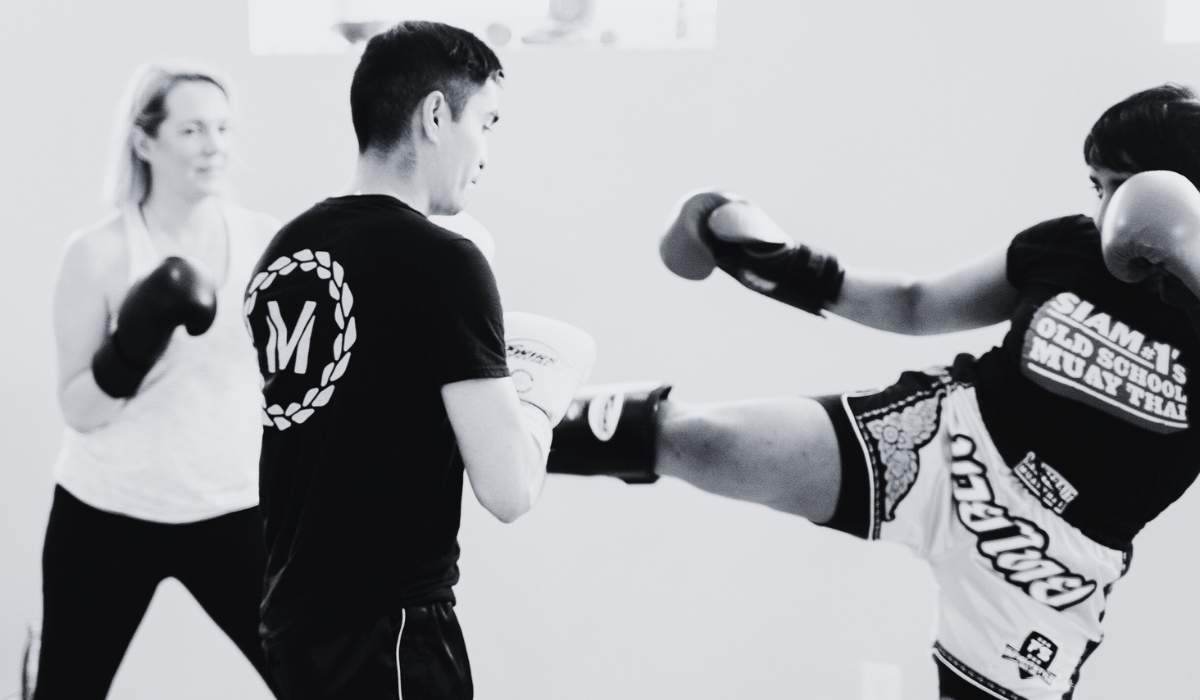
1. Makes you agile
Agility is about how quickly and effectively you can move your body in different directions. In a self-defence situation, how quickly you react makes a big difference. Imagine someone tries to grab you from behind, and you’re able to swiftly step aside and counterattack. At our Muay Thai gym in downtown Toronto, you’ll do more just learning how to throw a punch, we work on your agility.
2. Reduces stress and anxiety
Knowing that you know the skills and technique to take down anyone is itself a huge stress buster. It’s not just about the physical activity, which releases endorphins, but also about the confidence you gain.
3. Protect those around you
This isn’t about turning into a superhero overnight but about being able to assess situations more clearly and act decisively if needed. For example, you are at a club and you notice some girl’s been bothered by a stranger. Your training can help you defuse the situation safely.
4. Street Awareness
This means being more aware of your surroundings and being able to spot potential dangers before they escalate. Remember self-defence is about de-escalating a situation and not adding more fuel to it. You’ll be better able to understand body language, recognise suspicious behaviour, and know when to avoid particular areas.
5. Set values for others around you
Whether they let you know or not, you are offering confidence and belief to those around you, especially women. You become a role model, encouraging friends and family to consider their own safety and empowerment. Afterall, its benefits extend to emotional and mental well-being.

Is one self-defence class enough?
No, one class isn’t enough but you also don’t need to take any more than 4 or 5 classes. Self-defence classes are purely focused on showing you the techniques. You have to practise them on your own as part of your fitness routine or simple self-care.
How to train in self-defence properly?
Start small
Look for local self-defence workshops or classes designed specifically for women. Many gyms and community centres like ours in Downtown Toronto offer sessions that can introduce you to the basics.
Practice regularly
Like any skill, self-defence improves with practice. Make it a part of your routine, and you’ll notice your confidence and competence grow.
Stay informed
Keep up with the latest self-defence techniques and tools. Knowledge is power, and staying informed is key to being prepared.If you’re looking for self-defence classes for women in Little Portugal, send us an email and we’ll send you some information. We are here to support your goals.
It’s hard to ignore the strong bond that exists between physical activity and mental health, and Muay Thai, a distinctive martial art, exemplifies this perfectly. Widely recognized as “the art of eight limbs,” Muay Thai extends far beyond the realm of traditional martial arts. It emerges as a comprehensive discipline that rigorously trains both the body and the mind, fostering an intricate balance between the two.
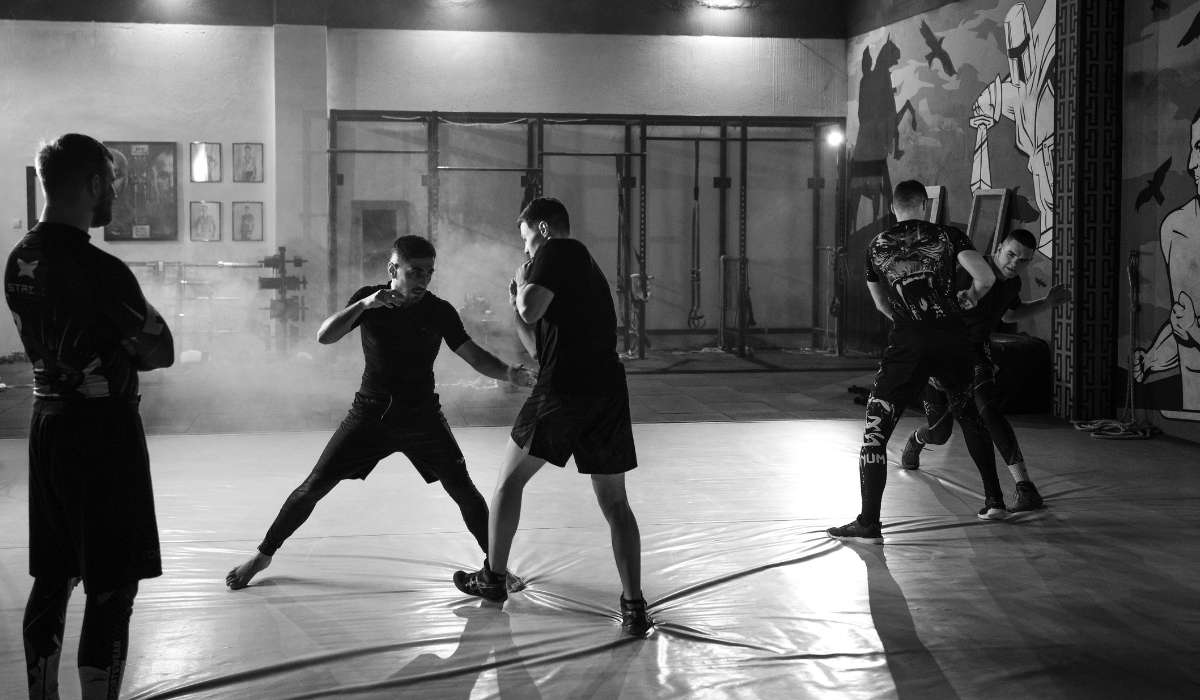
According to recent studies, engaging in martial arts practices, like Muay Thai, can significantly diminish symptoms associated with internalising mental health issues such as depression and anxiety.
Participating in Muay Thai trains your mind to focus, instils discipline, and promotes resilience, helping individuals navigate the challenges of life with a sense of purpose and determination.
Let’s explore the positive effects Muay Thai training has on mental health:
1. Stress Relief
Stress is a common feature of modern life. Left unchecked, it can lead to various health issues, including mental health disorders.
Muay Thai’s Role: Muay Thai training offers an excellent outlet for stress. The intense physical exertion helps you vent pent-up tension, while the focus required during training allows you to temporarily forget about stressors.
Prevention Strategy: Regular training can be a proactive measure to manage stress levels. If you’re feeling overwhelmed, taking a step back to attend a Muay Thai class could provide the necessary mental reset.
2. Improved Self-Esteem and Confidence
Self-esteem and confidence play vital roles in our mental wellbeing. Low self-esteem can lead to negative thought patterns, impacting our overall mental health.
Muay Thai’s Role: Muay Thai training helps build confidence in several ways. First, as you see your skills improving, it boosts confidence in your abilities. Second, physical fitness gains, such as increased strength and weight loss, can enhance your body image and self-esteem.
Prevention Strategy: Consistent training can lead to visible progress in your Muay Thai skills. Celebrating these achievements—no matter how small—can bolster your self-esteem and confidence.
3. Anxiety and Depression Management
Anxiety and depression are prevalent mental health issues in Canada and globally. Exercise is a proven method to help manage these conditions.
Muay Thai’s Role: Muay Thai, with its high-intensity workouts, triggers the release of endorphins—natural mood boosters. This can alleviate symptoms of depression and anxiety. Additionally, the social aspect of training in a group can foster a sense of belonging, combatting feelings of isolation common in these disorders.
Prevention Strategy: Regularly attending classes can help establish a routine, providing structure that can be beneficial for those dealing with depression or anxiety. Remember, it’s essential to seek professional help if you’re experiencing symptoms of these conditions.

4. Mental Resilience and Discipline
Resilience is our ability to bounce back from setbacks. Developing this skill is critical for maintaining mental health, especially during challenging times.
Muay Thai’s Role: Muay Thai is as much a mental game as it is a physical one. It requires patience, discipline, and perseverance, especially when learning new techniques or preparing for a fight. This builds mental toughness and resilience that can be applied to other areas of life.
Prevention Strategy: Embrace the challenges that come with Muay Thai training. Each one presents an opportunity to strengthen your mental resilience.
5. Mindfulness and Focus
Mindfulness—being fully engaged in the present moment—can reduce stress and improve overall mental wellbeing. Similarly, improved focus can reduce feelings of overwhelm and improve productivity.
Muay Thai’s Role: Practising Muay Thai requires intense concentration and attention to detail. This focus on the present moment can translate into enhanced mindfulness in daily life. Moreover, the need to strategize during sparring can improve cognitive function and focus.
Prevention Strategy: During training, fully immerse yourself in the moment, whether you’re practising a combo or engaging in a sparring session. This practice can enhance your mindfulness skills over time.
Whether you’re an experienced martial artist or a newbie to the discipline, incorporating Muay Thai training into your routine can be a powerful step towards better mental health. If you’re considering signing up for a Muay Thai gym in Downtown Toronto, sign up for a trial class at Montrait Muay Thai.
MMA can be a great way to stay fit, build confidence, and learn self-defence skills. However, life can get in the way, and you may have had to take a break from your martial arts journey for one reason or another. Whether it’s because of injury, a busy schedule, or other reasons, restarting your martial arts journey after a long break can be challenging.
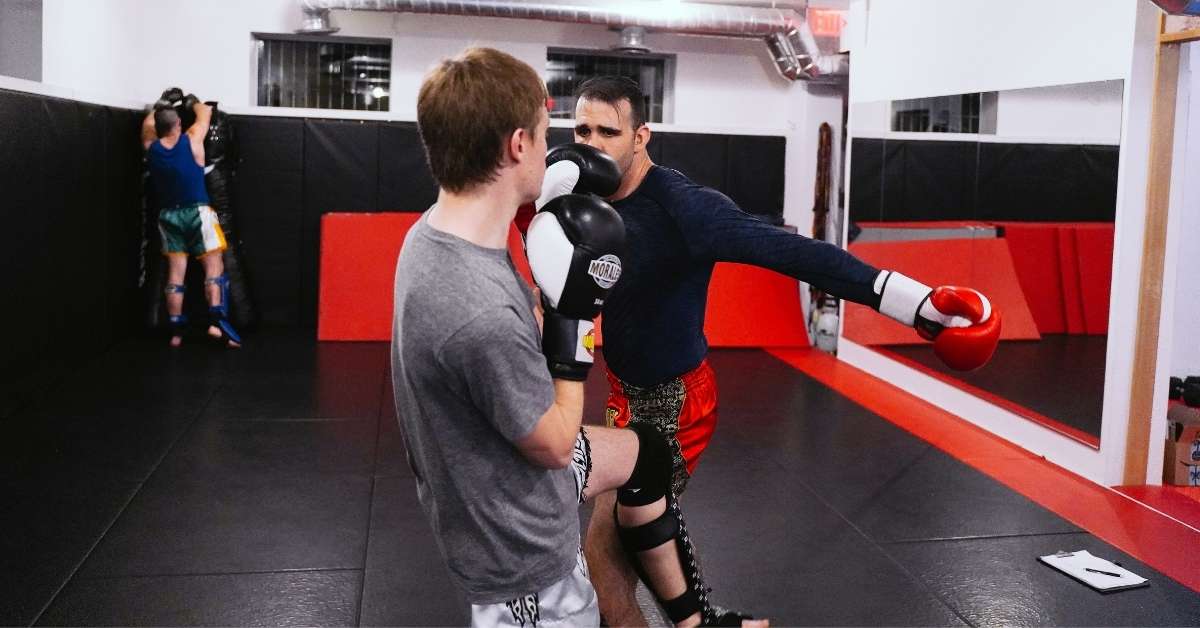
Here are 7 tips to help you get back on track with your MMA journey:
1. Set Realistic Goals
The first step to restarting your martial arts journey is to set realistic goals. If you were away from training for a long time, you may have lost some of your conditioning and skills. Don’t expect to be able to pick up right where you left off. Be realistic about what you can achieve and set achievable goals for yourself. For example, if you used to train for five hours a week, start with two hours a week and gradually work your way up.
2. Focus On Fundamentals
You may want to jump right back into advanced techniques, but it’s important to master the basics first. Take the time to review and practice the fundamentals, such as stances, footwork, and basic strikes. This will help you build a solid foundation and make it easier to progress to more advanced techniques later.
3. Find The Right Training Partner
Having the right training partner can make a big difference when you’re starting over. Look for someone who is at a similar skill level to you, has a positive attitude, and is committed to team up. A good training partner can help you stay motivated, provide feedback, and push you to work harder. When you train at Montrait Muay Thai, you can train with a motivated partner or you can bring a friend to train with you.

4. Be Patient With Yourself
It’s natural to feel frustrated when you’re not performing at the level you used to be. However, it’s important to be patient with yourself and not get discouraged. Remember that you’re starting over, and it will take time to regain your conditioning and skills. Celebrate small successes along the way and keep pushing yourself to improve.
5. Focus On Conditioning
When you’re starting over, it’s essential to focus on conditioning. You may have lost some of your strength and endurance during your break, and it’s important to build them back up gradually. Focus on exercises that build strength, endurance, and flexibility, such as running, weight training, and stretching.
6. Get Professional Help From MMA Trainer
If you’ve been away from training for a long time, it’s a good idea to get professional help. Find a reputable martial arts school in Toronto and sign up for classes with a qualified MMA instructor. They can help you develop a training plan that is tailored to your fitness level and skill level. They can also provide feedback on your technique and help you progress at a pace that is comfortable for you.
7. Take Care Of Your Body
Taking care of your body is essential when you’re starting over. Make sure to get enough rest, eat a healthy diet, and stay hydrated. You may also want to consider getting a massage or seeing a physical therapist if you’re experiencing any pain or discomfort.Restarting your martial arts journey after a long break can be challenging, but it’s not impossible. Remember to set realistic goals, focus on the fundamentals, find the right trainer, be patient with yourself, focus on conditioning, get professional help from a personal trainer in Toronto, and take care of your body. With dedication and hard work, you can get back on track and continue your martial arts journey.
8. Rebuild Your Mental Game
While physical training matters, your mindset and willpower will help you get back to routine. Treat this stage as a fresh chapter, not a setback. Reflect on what brought you to MMA in the first place. Was it discipline, confidence, or stress relief? Use that reason to guide your comeback. Stay curious and open to learning. Use a journal to set goals, track progress and wins, and make adjustments to your training routine.
Picture this – you’ve been working out 3-5 times a week. You’ve lost more weight than you expected, you feel great mentally and physically, and you’re more active. However, recently you’ve noticed that your progress has slowed down.
What could the reason be?
You hit a fitness plateau! It is a great sign that you’ve been working out consistently but your fitness journey is yet not over. Our trainers at Montrait Muay Thai have put together a list of their best strategies to bust your fitness plateau.
Top 4 Strategies To Break Fitness Plateau
1. Take a week’s rest to recover
Most people think you can only build muscles when you’re constantly training. But the truth is, your muscles need time to recover from an intense workout session, re-fuel with protein and nutrients, and build new tissue.
Plan a recovery week every 6-8 weeks. Here are some benefits of recovery week:
– ensure muscle repair and growth
– relax your central nervous system from rigorous training
– get back to training with a fresh and motivated mindset
– better focus
2. Try modified “superset” training
A “superset” is when you combine two exercises either for the same muscle group or two different muscle groups. You perform the two exercises without any rest in between. By the end, you would have performed 15-20 total repetitions in total.
In modified “superset” you lower the repetitions to 6-8 reps for each workout. For the second set, add some weights to your workout. Keep increasing the weight for the remaining sets until the end of your workout.

3. Try a new workout
Spice your exercise routine and try a new workout, something you haven’t tried before. It could be something as simple as a 30-minute run or brisk walking, cycling, or some relaxing yoga. If you’re up for a challenge, Montrait Muay Thai has the perfect workout in mind for you!
Join us for an intense session of Muay Thai in Downtown Toronto! Our sessions are 90-minutes long and we promise to make you sweat like you’ve never before.
4. Focus on nutrition
A common reason for hitting the fitness plateau is improper nutrition. If you’re on a weight loss journey and cutting back too many calories, your body is trying to “preserve energy.” And that’s the reason you aren’t losing weight.
An average adult needs 2,000 calories every day. Use free calorie counting tools available online to find out your body’s needs. Remember, not all fats, sugar, or carbs are bad. You consult with a registered dietitian or work with a personal trainer at Montrait Muay Thai for better nutrition support and guidance.
Make sure you don’t make any sudden changes to your workout routine or lifestyle. All the methods we’ve mentioned in this article should be introduced gradually, so that your body doesn’t feel stressed and progresses into a longer fitness plateau.