
Peter Montrait - The Kru - Montrai Muay Thai

Ever wondered why some fighters excel while others struggle? A personal trainer could be the missing key.

Whether you wish to turn professional or want to learn MMA recreationally, a personal trainer in Toronto doesn’t just guide your physical training. They help you balance the physical, nutritional, and mental aspects of MMA to keep you on track, injury-free, and progressing faster than ever before.

What exactly is MMA? 

Mixed Martial Arts (MMA) is a dynamic sport that pushes both your body and mind to their limits. Blending techniques from boxing, wrestling, Brazilian jiu-jitsu, judo, karate, Muay Thai, and other martial arts, MMA creates a combat environment that demands versatility, strategy, and adaptability. Fighters utilize a mix of striking, grappling, and ground techniques, all within the intense confines of an octagonal cage, where each round tests their skills, endurance, and willpower. Matches take place in a fenced area, often an octagonal cage, where fighters engage in rounds, testing their ability to attack and defend using diverse techniques. 

Here’s why you need a personal training for your MMA journey: 

1. Take guesswork out of your fitness journey 

A personal trainer knows the basics of striking, grappling, and conditioning that are required for this sport. They can correct techniques, ensuring that punches, kicks, and grappling maneuvers are executed efficiently and safely. This directly reduces your chances of injuries right away. 

2. Personalized Training Plans

Everyone’s body reacts differently to training. A personal trainer tailors workouts to your unique needs, goals, and physical condition. They can adjust your training regimen to focus on areas that need improvement, whether it’s increasing strength, enhancing flexibility, or improving cardiovascular endurance. At Montrait Muay Thai, we are all about meeting your fitness goals sustainability with a bigger focus on mental health

3. Motivation and Accountability

Knowing someone is invested in your success. With a personal trainer, you’re not just showing up for yourself; you’re showing up for someone who expects you to perform at your best. Their ongoing support means you’re consistently pushed beyond your limits, helping you tackle weaknesses, improve techniques, and stay committed to your goals. Plus, a trainer’s expertise minimizes the risk of injury and keeps you focused on the right areas for growth

4. Injury Prevention and Management

Injuries can be a significant setback in any athlete’s journey. Personal trainers are skilled in designing workouts that not only minimize the risk of injury but also help in recovering from existing injuries. They understand how to balance the intensity of training with adequate rest and recovery techniques. They will also provide you feedback on how to modify techniques to prevent any injuries that you are more susceptible to. 

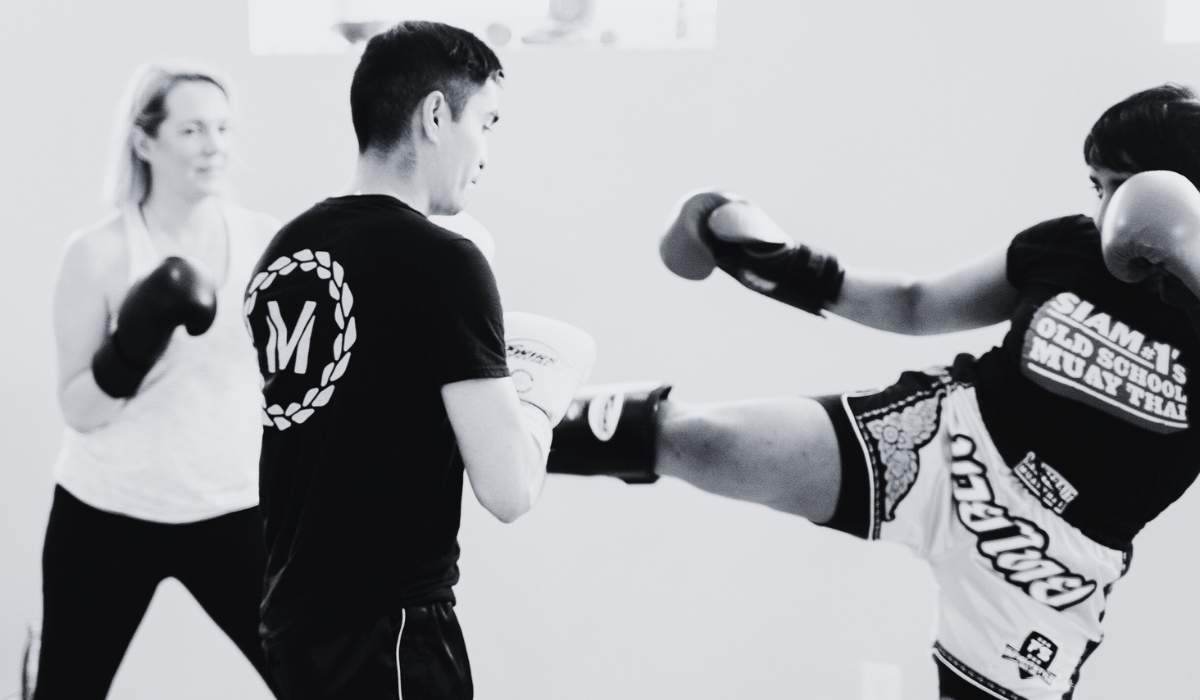
Two muay thai students practising against each other

5. Hands-on Information on Nutrition 

Nutrition always plays a big role in any fitness journey and more importantly when you are making physical drastic changes. Your trainer will have knowledge or access to resources about sports nutrition. They can guide you on what to eat, when to eat, and how to balance your diet to optimize performance and recovery.

6. Mental Strength and Stress Management

Any game that involves intense fights is as much a mental game as it is physical. They provide guidance on managing stress, anxiety, and the intense pressure often encountered in competitive settings. Through their coaching, trainers equip you with strategies to maintain composure and focus under challenging circumstances, enhancing your mental preparedness for the rigors of competition.

7. Customized Conditioning

Your trainer will work with you to develop conditioning programs that help you strengthen your weak areas. When you work with a group trainer, they can’t focus on each student individually. They will also provide you with process and advice on what to do when a fight is coming up or afterwards or when you aren’t feeling too well. 

8. Monitor Progress and Receive Feedback

By tracking progress, you can make necessary adjustments. Personal trainers provide objective feedback on your performance, helping you understand your strengths and areas for improvement.  

9. Learn to Train Safely

Safety is paramount in any sport. Your trainer will ensure that training sessions are conducted safely, teaching proper techniques and ensuring that equipment is used correctly. While doing this, you will cultivate healthy fitness habits. Finding a good personal trainer will make a world of a difference.

If you’re looking for a MMA personal trainer in Toronto, reach out to Montrait Muay Thai. Our trainers work on your schedule, so you can make the most out of your fitness journey. Let’s get burning!

If you’ve ever been intrigued by the world of martial arts, you’ve likely come across Muay Thai and Muay Boran. Many people hear these names but struggle to tell them apart. These two Thai fighting arts share a rich history and cultural significance, yet they are distinct in many ways. 

Let’s unravel the complexities and nuances that set these two martial arts apart. From their origins to techniques, rules, and cultural impact, we’ll explore every facet to give you a wholesome understanding.

1. Origins and History

Muay Thai: The Modern Marvel

Muay Thai, often referred to as the “Art of Eight Limbs,” is a martial art that has gained international recognition. It originated in the mid-18th century and was influenced by military training. As Thailand entered periods of national consolidation, formal rules were introduced to protect fighters and standardize competition. Gloves replaced rope bindings in the early 20th century, rounds were timed, and weight classes were created. This transition marked Muay Thai’s shift from battlefield preparation to regulated sport.

Over the years, it has evolved into a competition-based sport with specific rules and regulations. It is also practiced as an intense workout to help you lose fat in targeted areas of your body. 

Muay Boran: The Ancient Ancestor

Muay Boran, on the other hand, is the predecessor of Muay Thai and dates back to as early as the 16th century. It was developed for self-defense and used in warfare. Unlike Muay Thai, Muay Boran is not confined to a set of standardized rules, making it a more “free-form” martial art. Historically, different regions developed their own tactical identities. Fighters were trained to defend villages and kingdoms, and techniques that prioritized survival, structural damage, and rapid incapacitation were practiced more.

2. Techniques and Styles

While Muay Thai focuses on striking techniques using the fists, elbows, knees, and shins, Muay Boran encompasses a broader range of techniques, which include throws, joint locks, and even strikes to vulnerable areas like the eyes or throat. Styles can vary significantly depending on the region, such as Muay Chaiya, Muay Korat, and Muay Lopburi.

Clinch work plays a major role in Muay Thai, where fighters manipulate posture to land knees and off-balance opponents. In contrast, Muay Boran allows sweeps that aim to damage knees or ankles and uses standing grappling to break structure quickly.

A muay thai trainer performing a shin kick in front of a student

3. Rules and Regulations

Muay Thai is governed by a specific set of rules, including weight classes, round lengths, and permissible strikes. Fighters wear gloves and shorts and compete in a ring.

Professional Muay Thai bouts in Thailand typically consist of five 3-minute rounds with two minute breaks. Judges score based on effective strikes, balance, dominance in the clinch, and visible impact. Clean knees and elbows score highly, especially when they disrupt posture or clearly affect an opponent.

Fouls include headbutts, groin strikes, biting, and attacks to the back of the head. Referees can issue warnings, deduct points, or stop a fight for safety. Medical checks before and after bouts are mandatory in regulated promotions.

On the other hand, Muay Boran has fewer rules and restrictions. Traditionally, fighters’ fists were wrapped in hemp rope, and the fighting area was less defined. Because Muay Boran developed for combat rather than sport, it includes techniques that are illegal in modern Muay Thai competition. These may involve joint destruction, spinal attacks, and strikes to the throat or groin. There is no standardized scoring system and shouldn’t be turned into a fight.

4. Training and Practicing

Training in Muay Thai is rigorous and structured, focusing on physical conditioning, pad work, and sparring. It’s common to see Muay Thai gyms equipped with heavy bags, pads, and a ring for sparring. Training in Muay Boran is less formalized but equally intense. It often includes practicing with wooden dummies and emphasizes real-world applications of techniques.

While both martial arts share a focus on striking and originate from Thailand, they diverge significantly in their approach to techniques, rules, and training. Muay Thai is more streamlined and sport-oriented, whereas Muay Boran is more comprehensive and geared towards self-defense.

5. Cultural Significance

Muay Thai is not just a sport; it’s a cornerstone of Thai culture. In Thailand, it’s celebrated with religious ceremonies and is a staple in major stadiums like Rajadamnern and Lumpinee. Internationally, its appeal has skyrocketed, gaining a diverse following and even securing a spot in global sports events, including the Olympics.

Before every professional bout, fighters perform the Wai Kru Ram Muay, a ritual dance that honors teachers and lineage. They wear the Mongkhon headband as a symbol of protection and respect. These traditions preserve the spiritual backbone of the sport, even as it modernizes globally.

While Muay Boran may not share the international limelight, its cultural significance within Thailand is profound. Often showcased during cultural festivals, Muay Boran serves as a living testament to Thailand’s rich martial arts heritage. It’s a cherished art form that connects the Thai people to their ancient traditions and history.

While the world of traditional sports is constantly evolving, it is important to train for them with the same respect.

Become A Muay Thai Fighter in Toronto

Start your journey at Montrait Muay Thai and train with the structure and intensity required of a serious fighter. We offer dedicated 1-on-1 coaching for athletes who want to compete professionally and build a complete fight game from the ground up.

Our coaches have fought professionally alongside some of the top athletes in Canada and bring their experience into every session. You will develop technical precision, defensive responsibility, clinch control, conditioning standards, and tactical awareness that translate directly into live rounds

You will develop technical precision, defensive responsibility, clinch control, conditioning standards, and tactical awareness that translate directly into live rounds.

If you are serious about stepping into the ring, reach out to us today.

Muay Thai, also known as the “Art of the Eight Limbs,” isn’t just punches and high-flying kicks. It’s an art steeped in rich Thai history, blending combat with culture. Ever watched a Muay Thai bout and been captivated by the mesmerizing dance ritual fighters perform before the action kicks off? That’s the Wai Kru, a heartwarming tribute that speaks volumes about this ancient sport’s essence. 
“Wai ” is a Thai gesture where hands come together like in prayer. “Kru” means the revered teacher. So, in essence, fighters are showing respect to their trainers and the lineage before them. Let’s talk more about Wai Kru and its importance. 

Origins of Wai Kru

The roots of the Wai Kru can be traced back to the ancient Siamese kingdoms, where martial art forms were integral to the military training of warriors. Muay Thai, known as Muay Boran in its original form, was a combat skill taught to soldiers.

Historical Texts: The earliest written records mentioning a form of Wai Kru ritual are found in Thai historical texts. This shows that beyond its martial application, Muay Boran had spiritual and ritualistic dimensions. The Wai Kru was practiced as a way for warriors to show gratitude to their masters and invoke protection from divine entities.

Evolution: Over time, as Muay Boran transitioned to Muay Thai and became a sport, the Wai Kru ritual was also adapted. While its combative utility diminished, its cultural and spiritual significance grew, becoming an integral part of professional Muay Thai fights.

Regional differences: In Northern Thailand, the movements tend to be slower and more graceful and incorporates the region’s Lanna cultural heritage. On the other hand, Southern styles are more energetic and reflect the region’s fighting spirit. You’ll find many gyms in Thailand that focuses on a particular style of Wai Kru.

Symbolic Attire: The Mongkhon and Pra Jiad are two parts of the Wai Kru attire with a lot of cultural significance (see picture below). The Mongkhon, a sacred headband, is traditionally blessed by a monk or a respected teacher. Fighters wear it during their entrance and the Wai Kru ritual as a symbol of protection, luck, and respect for their gym. The Pra Jiad originates from ancient times when Thai warriors tore fabric from their mothers’ clothing for good luck before heading into battle. Today, these armbands symbolise courage, honour, and a connection to the fighter’s roots.

wai kru muay thai, muay thai classes in Downtown Toronto by montrait muay thai

Significance of the Wai Kru

Let’s uncover the deeper meaning behind this captivating pre-fight dance ritual. 

1. Paying Respect

It’s worth noting that in Thai culture, the relationship between student and teacher is deeply revered. This isn’t restricted just to martial arts but extends to other spheres of learning too. The Wai Kru in Muay Thai exemplifies this cultural value. By performing the ritual, fighters recognize that their skills are not just the result of individual prowess but also the cumulative wisdom passed down through generations.

2. Spiritual Connection

In Thai belief systems, the spiritual realm is closely intertwined with the living. By performing the Wai Kru, fighters are invoking the protection of guardian spirits, ancestors, and even deities. Some fighters have personal rituals embedded within their Wai Kru, where they communicate with a specific guardian spirit or deceased loved one for guidance and protection.

3. Mental Preparation

The rhythmic, often hypnotic movements of the Wai Kru help fighters enter a trance-like state, ensuring they are mentally attuned to the forthcoming fight. It’s a moment of introspection, where fighters can connect with their inner selves, shedding external distractions.

4. Scoping the Ring

This practical aspect of the ritual allows the fighter to assess the ring’s condition. They might take note of potential slippery spots, judge the bounce of the canvas, or gauge the distance between ropes.

Components of the Wai Kru

Ram Muay: Each training camp in Thailand, known as a “gym” or “camp,” often has its own unique Ram Muay. It signifies the gym’s lineage, its masters, and its fighting philosophy. It’s akin to a school’s anthem, unique and full of tradition.

Head Circles: This act of purification signifies the expulsion of malevolent spirits. The number three holds great significance in Thai culture, often linked with the three gems of Buddhism. By circling their heads three times, fighters are reinforcing this protective barrier.

Sealing the Ring: This process establishes the ring as sacred ground. It’s akin to the drawing of a protective circle in many global mystical traditions, where the space within is safeguarded from negative external forces.

Bowing Three Times: Besides the Buddhist trinity, the act of bowing three times is also a nod to the fighter’s lineage: they bow to their teacher, their teacher’s teacher, and so on. This act cements the bond between the past and present, ensuring the fighter is backed by generations of wisdom.

The Cultural Continuum

As Muay Thai gained global traction, the Wai Kru ritual faced the challenge of adaptation. Outside Thailand, the spiritual and cultural nuances might not resonate as deeply. However, the underlying themes of respect, preparation, and acknowledgment are universal. At Montrait Muay Thai in Toronto we ensure our students understand the importance of respect for their peers and teachers. While the movements might be adjusted to better suit a global audience, many non-Thai fighters adopt the Wai Kru ritual in its traditional form, recognizing its integral role in the sport’s identity.

What is the purpose of the Wai Kru ritual in Muay Thai?

Fighters use Wai Kru to pay respect to their teachers, ancestors, and the sport itself. It also doubles as a warm-up to prepare physically and mentally for the bout.

Are there different styles of Wai Kru?

Yes, the Wai Kru can vary based on regional traditions and individual training camps. Northern Thailand’s version often features slower, more graceful movements, while Southern styles are typically more energetic, reflecting the region’s dynamic spirit.

Is the Wai Kru performed in all Muay Thai matches?

While the Wai Kru is a traditional and significant aspect of Muay Thai, it isn’t always performed. However, in Thailand, it’s customary in most matches, especially professional and ceremonial bouts.

Can non-Thai practitioners perform the Wai Kru?

Absolutely. Non-Thai practitioners are encouraged to learn and perform the Wai Kru as a sign of respect for the art and its traditions. Many training camps worldwide teach the ritual as it helps you understand Muay Thai’s cultural depth.

Don’t Let Fear Hold You Back

Most of us feel anxious when starting new.. worrying whether we’ll fit in or embarrass ourselves. That’s completely normal.

At Montrait Muay Thai, every student begins with an Initial Performance Session (IPS). One of our coaches will assess how your body moves, talk about Muay Thai and your training goals.

From there, you’ll work with a coach in private sessions to learn the fundamentals at your own pace.

By the time you join group classes, you’ll feel confident in your form, technique, and understanding of Muay Thai.

We’re excited to talk more. Book your IPS today.

It’s hard to ignore the strong bond that exists between physical activity and mental health, and Muay Thai, a distinctive martial art, exemplifies this perfectly. Widely recognized as “the art of eight limbs,” Muay Thai extends far beyond the realm of traditional martial arts. It emerges as a comprehensive discipline that rigorously trains both the body and the mind, fostering an intricate balance between the two.

According to recent studies, engaging in martial arts practices, like Muay Thai, can significantly diminish symptoms associated with internalising mental health issues such as depression and anxiety.

Participating in Muay Thai trains your mind to focus, instils discipline, and promotes resilience, helping individuals navigate the challenges of life with a sense of purpose and determination. 

Let’s explore the positive effects Muay Thai training has on mental health:   

1. Stress Relief

Stress is a common feature of modern life. Left unchecked, it can lead to various health issues, including mental health disorders.

Muay Thai’s Role: Muay Thai training offers an excellent outlet for stress. The intense physical exertion helps you vent pent-up tension, while the focus required during training allows you to temporarily forget about stressors.

Prevention Strategy: Regular training can be a proactive measure to manage stress levels. If you’re feeling overwhelmed, taking a step back to attend a Muay Thai class could provide the necessary mental reset.

2. Improved Self-Esteem and Confidence

Self-esteem and confidence play vital roles in our mental wellbeing. Low self-esteem can lead to negative thought patterns, impacting our overall mental health.

Muay Thai’s Role: Muay Thai training helps build confidence in several ways. First, as you see your skills improving, it boosts confidence in your abilities. Second, physical fitness gains, such as increased strength and weight loss, can enhance your body image and self-esteem.

Prevention Strategy: Consistent training can lead to visible progress in your Muay Thai skills. Celebrating these achievements—no matter how small—can bolster your self-esteem and confidence.

3. Anxiety and Depression Management

Anxiety and depression are prevalent mental health issues in Canada and globally. Exercise is a proven method to help manage these conditions.

Muay Thai’s Role: Muay Thai, with its high-intensity workouts, triggers the release of endorphins—natural mood boosters. This can alleviate symptoms of depression and anxiety. Additionally, the social aspect of training in a group can foster a sense of belonging, combatting feelings of isolation common in these disorders.

Prevention Strategy: Regularly attending classes can help establish a routine, providing structure that can be beneficial for those dealing with depression or anxiety. Remember, it’s essential to seek professional help if you’re experiencing symptoms of these conditions.

beginners Muay Thai training in downtown toronto offered by montrait Muay Thai. sign up for your first trial class for $10 only!

4. Mental Resilience and Discipline

Resilience is our ability to bounce back from setbacks. Developing this skill is critical for maintaining mental health, especially during challenging times.

Muay Thai’s Role: Muay Thai is as much a mental game as it is a physical one. It requires patience, discipline, and perseverance, especially when learning new techniques or preparing for a fight. This builds mental toughness and resilience that can be applied to other areas of life.

Prevention Strategy: Embrace the challenges that come with Muay Thai training. Each one presents an opportunity to strengthen your mental resilience.

5. Mindfulness and Focus

Mindfulness—being fully engaged in the present moment—can reduce stress and improve overall mental wellbeing. Similarly, improved focus can reduce feelings of overwhelm and improve productivity.

Muay Thai’s Role: Practising Muay Thai requires intense concentration and attention to detail. This focus on the present moment can translate into enhanced mindfulness in daily life. Moreover, the need to strategize during sparring can improve cognitive function and focus.

Prevention Strategy: During training, fully immerse yourself in the moment, whether you’re practising a combo or engaging in a sparring session. This practice can enhance your mindfulness skills over time.

Whether you’re an experienced martial artist or a newbie to the discipline, incorporating Muay Thai training into your routine can be a powerful step towards better mental health. If you’re considering signing up for a Muay Thai gym in Downtown Toronto, sign up for a trial class at Montrait Muay Thai.

Do you have an unwavering passion for Muay Thai? Does the thrill of landing a powerful roundhouse kick or a swift elbow strike excite you? If you’re in Toronto and considering turning your passion into a profession, you’re in luck. Montrait Muay Thai in Little Portugal is a Muay Thai gym with a strong focus on traditional techniques. 

While you’re looking for the right gym, remember to choose one that not only offers a solid training regime but also focuses on cultivating respect, a core value in Muay Thai. Respect in this context is multi-dimensional; it’s respect for the sport, your trainers, your fellow trainees, and most importantly, for yourself. A gym that teaches this essential value will provide an environment where you grow both as a fighter and a person.

Here’s how you can become a professional Muay Thai fighter in Toronto: 

1. Finding Your Muay Thai Home Base

The first step to becoming a professional Muay Thai fighter is developing a rock-solid foundation. Toronto is home to numerous reputable Muay Thai gyms where you can get quality training. Choose a gym that cultivates respect for the sport, your trainers, your fellow trainees, and most importantly, for yourself. Look for a results-oriented training program in your city to build a strong foundation in the sport.

2. Embrace Rigorous Training

Immerse yourself in the Muay Thai training program, no matter how tough it might initially seem. Muay Thai is demanding, but that’s what makes it so rewarding. Expect long hours, early mornings, and plenty of sweat. We would recommend you start slow and only take a couple classes a week until you have your energy levels back. 

3. Participate in Local Amateur Fights

Step into the ring to put your training to the test. Local amateur events are your proving ground, and they help you gauge your progress. Before you sign up, ask your trainer if they feel you’re ready and how to prepare for these fights. Organizations like the Ontario Muay Thai Association regularly hold amateur fights where you can gain experience.

Muay Thai personal training to become a professional Muay Thai fighter, Muay Thai classes in toronto, kids Muay Thai program

4. Maintain a Balanced and Nutritious Diet

If you’re heard the quote “you are what you eat”, it matters 10 times more when training to be a professional fighter. A personalized nutrition plan packed with protein and nutrients will give you the energy you need to train and recover. If your progress has halted, it’s probably because you aren’t eating enough protein and drinking adequate amounts of water. Consider consulting with a nutritionist, so you track progress.

5. Commit to Discipline and Dedication

To become a professional Muay Thai fighter, you must commit to your craft and make sacrifices. This could mean fewer hangouts with friends, fewer indulgences, and more hours dedicated to training and recovery. It requires disciplined training, a strict diet, and adequate rest. As a representative of the sport, you are expected to uphold its values in your daily life. You should respect the rules and regulations, respect your opponents, and above all, respect yourself by maintaining a high level of personal discipline.

6. Consider Turning Pro

Once you’ve honed your skills, accrued experience, and earned recognition in the local circuit, you can then consider turning pro. This is a significant step and requires careful deliberation. It may involve more rigorous training, longer hours, and a full commitment to Muay Thai. Be sure to consult with your Muay Thai coach and consider your readiness, both mentally and physically, before taking this step.

7. The Journey Is a Marathon, Not a Sprint

Remember that the journey to becoming a professional Muay Thai fighter is not a sprint; it’s a marathon. It requires time, patience, perseverance, and above all, respect for the sport and everyone involved. Becoming a professional fighter is not just about the physical capacity to fight, but also about the mental and emotional resilience to face challenges, setbacks, and disappointments.

Montrait Muay Thai offers personal training in Toronto designed to help you meet your goals faster. We work on your schedule and support you throughout the journey from diet planning to community support. Get in touch today for a free personal training consultation.

As women continue to break barriers and shatter stereotypes, MMA offers an empowering platform for personal growth, physical fitness, and self-defense. Learning MMA provides women with an opportunity to develop confidence, resilience, and mental strength. Mixed Martial Arts (MMA) has gained immense popularity in recent years, transcending gender barriers and attracting women from all walks of life. While some may perceive MMA as a male-dominated sport, women are increasingly discovering the numerous benefits it offers. As a MMA gym in Downtown Toronto, we host women’s only MMA workshops throughout the year that are focused on self-defense skills. If you’d like to book a spot for our next workshop, send us a DM. 
Here are 4 amazing benefits for women from learning MMA: 

1. Empowerment and Self-Defense  

MMA training in Toronto helps women develop a sense of strength, both physically and mentally. Through learning self-defense techniques, you’ll gain the skills and confidence necessary to protect yourself and others in challenging situations. Martial arts teaches practical skills such as striking, grappling, and submissions, equipping women with effective tools for self-defense. This newfound confidence often extends beyond physical encounters, empowering women to assert themselves in various aspects of their lives.

Muay Thai gym in toronto, best mma gym for women near me, trial class Muay Thai gym near me, beginners Muay Thai training for women, self defence class for women

2. Physical Fitness and Health 

MMA is an intense and diverse sport that incorporates various martial arts disciplines such as boxing, kickboxing, Brazilian Jiu-Jitsu, and Muay Thai. These workouts improve overall fitness levels, enhance agility, and build core strength. Regular MMA training in Toronto can also help you achieve fitness goals, increase muscle tone, and improve cardiovascular health. At the same time, the physical demands of MMA training can positively impact mental health by reducing stress, boosting mood, and increasing energy levels.

3. Increased Confidence and Mental Resilience 

Overcoming physical challenges and pushing personal boundaries fosters mental resilience, leading to increased self-esteem and self-belief. The rigorous training sessions require discipline, focus, and perseverance, all of which contribute to mental strength. Through MMA, you’ll learn to embrace their capabilities, develop mental toughness, and overcome self-doubt. These attributes often transcend the training environment and translate into everyday life, allowing women to tackle challenges with newfound confidence.

4. Building a Supportive Community

In a typically male-dominated sport, female practitioners often find camaraderie and solidarity among their peers. Training in a group setting fosters a sense of belonging, as women motivate and support each other throughout their journey. The shared experiences and challenges create strong bonds and lasting friendships. This supportive community extends beyond the training facility, providing a network of like-minded individuals who understand the unique journey of learning MMA as a woman.

At Montrait Muay Thai, we are big supporters of women empowerment. We think of our gym like a community of Muay Thai enthusiasts who support and help each other grow stronger. Our Muay Thai classes in Downtown Toronto are conducted in a welcoming manner and are 100% safe for people of all ages, genders, and ethnicities. Join us for a trial class and see it for yourself!

When it comes to after-school activities for children, there are countless options to choose from. However, many parents tend to focus on team sports like basketball, soccer, or football as a way to keep their kids active and socialising with their peers. While team sports can certainly have their benefits, there’s another option that’s often overlooked: martial arts.

Martial arts in Toronto can provide children with a wide range of physical, mental, and social benefits that team sports may not be able to match, especially during the winters. From building confidence and self-discipline to improving focus and concentration, martial arts can help children develop important life skills that will serve them well into adulthood. 

Here are 9 reasons why martial arts is better for kids than team sports: 

1. Individual focus

Martial arts is an individual sport, meaning each student trains and competes on their own. This allows for individual focus and attention from the instructor, which can lead to better progress and skill development. In team sports, the focus is often on the team as a whole, and individual players may not receive the same level of attention.

2. Discipline and self-control

Discipline and self-control are two of the most important skills children should learn and a martial art like Muay Thai teaches just that. Through martial arts training, children learn to control their movements and emotions, as well as develop a strong work ethic. These skills can translate into other areas of their lives, such as academics and relationships.

3. Self-defence skills

Martial arts teaches children self-defence skills that can help them protect themselves if they get bullied at school. It is a common concern among parents. This can increase their confidence and sense of security, as well as give them the tools to handle potentially dangerous situations and also help others around them. 

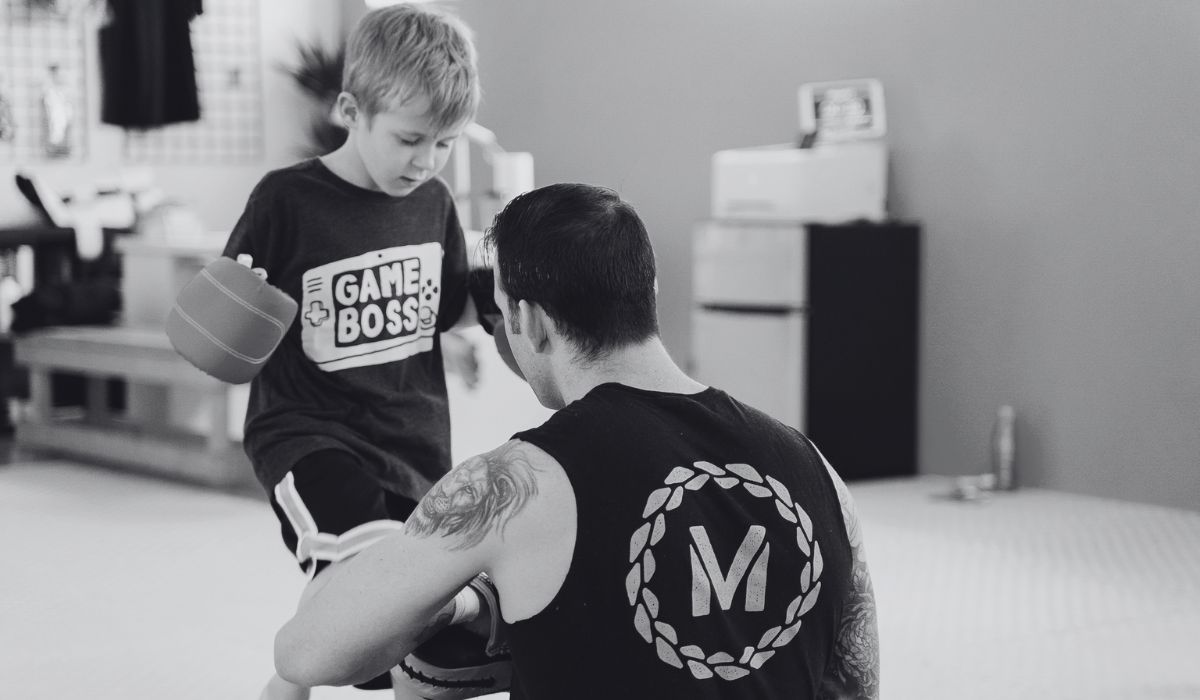
Muay Thai kids class downtown toronto at montrait Muay Thai hosted in a mma gym in little Portugal every Tuesday, Thursday, and saturday

4. Non-competitive nature

While martial arts does involve competition, it is not as focused on winning and losing as team sports can be. The emphasis is on personal growth and improvement, rather than beating the competition. This can reduce the pressure and stress that can come with team sports.

5. Focus and concentration

Muay Thai requires focus and concentration, which can improve a child’s ability to concentrate in other areas of their life. By learning to focus on the task at hand, children can improve their academic performance and overall productivity.

6. Respect for others

Martial arts places a strong emphasis on respect for others, including instructors and fellow students. At our gym, Montrait Muay Thai, respect for trainers and fellow students is very important. It can help children develop empathy and compassion, as well as improve their relationships with others.

7. Reduced risk of injury

While all sports carry some risk of injury, martial arts tends to have a lower risk compared to contact team sports such as football or hockey. This can give parents peace of mind when it comes to their child’s safety. At our Muay Thai gym we emphasise on getting the basic techniques right and only then students are progressed into more difficult techniques. 

8. Inclusive nature

Martial arts is inclusive and accessible to children of all abilities and skill levels. It does not require a certain body type or level of athleticism, making it a great option for children who may not excel in team sports.

9. Lifelong skill

Martial arts is a lifelong skill that children can continue to develop and improve throughout their lives. Unlike team sports, which may not be feasible to continue into adulthood, martial arts can be practised well into old age.

Martial Arts supports development through every age

At ages 4 to 6, martial arts helps build foundational motor skills, including balance, coordination, and core strength, through structured repetition and fun drills. They learn how to listen and understand simple concepts of the sport, team building, and leadership.

From ages 7 to 10, children begin developing more advanced physical control and emotional regulation (Frontiers in Psychology study). Martial arts classes offer a safe space to practice managing frustration, staying focused during drills, and working through challenges with patience.

By age 11 and up, many kids face academic pressure, social identity challenges, and even bullying. Martial arts not only reinforces confidence and peer respect, but also helps teens cope with stress. A Canadian study also found that adolescents who practice martial arts show better school behaviour and reduced aggression.

This long-term developmental support makes martial arts not just an activity, but a guiding structure that grows with your child.

We have an amazing Muay Thai program for kids where we focus on helping kids improve focus and develop skills in a fun, engaging, and fast-paced environment. We conduct one-hour long classes every Tuesday, Thursday, and Saturday. Send an email at peter@stg-montraitmuaythai-staging.kinsta.cloud to book a gym tour!

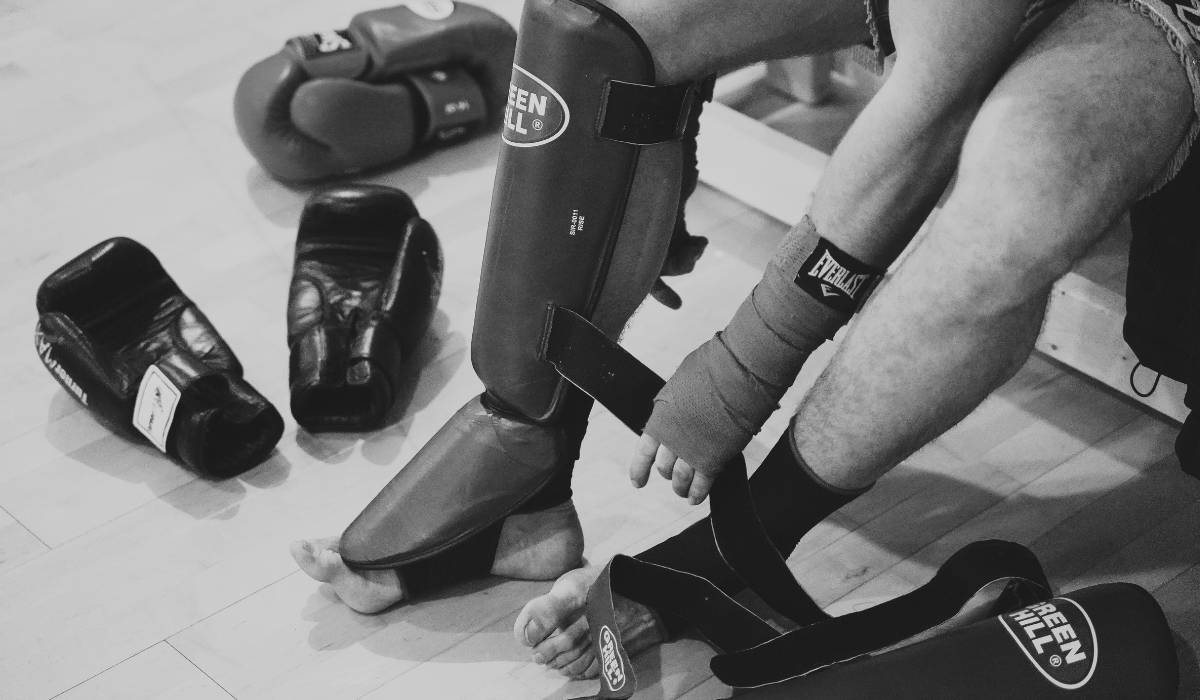
Muay Thai is a combat sport that involves a combination of punches, kicks, elbow strikes, and knee strikes. As with any sport, having the right gear is crucial for both safety and performance. When it comes to Muay Thai, finding the right gear makes a huge difference. You’ll be more comfortable and confident in your moves. You can also purchase Muay Thai gear at our MMA gym in Downtown Toronto.
Here is a guide to help you choose the right Muay Thai gear:

1. Boxing Gloves

Boxing gloves protect your hands and wrists during striking and blocking. When choosing boxing gloves, consider the weight, size, and material. For adults, our trainers at Montrait Muay Thai recommend 12 oz gloves. The weight should be appropriate for your size and skill level, while the material should be durable and comfortable. You should also consider whether you need gloves with Velcro or laces, as this will affect the fit and convenience.

2. Hand Wraps

Hand wraps are worn under boxing gloves to provide additional support and protection for the hands and wrists. They also help to absorb sweat and prevent odour buildup. When choosing hand wraps, consider the length, width, and material. The length should be long enough to wrap around your hands and wrists multiple times, while the width should be appropriate for your hand size. The material should be breathable and durable.

Muay Thai gym, montrait muay thai, mma gym near me, Muay Thai classes in toronto

3. Shin Guards

Shin guards are essential for protecting your shins during kicks and blocking. When choosing shin guards, consider the size, shape, and material. The size should be appropriate for your height and weight, while the shape should provide full coverage and protection for your shins. The material should be lightweight and durable, as well as comfortable and breathable.

4. Mouthguard

A mouthguard is essential for protecting your teeth, gums, and jaw during training and fighting. When choosing a mouthguard, consider the material, size, and fit. The material should be durable and easy to clean, while the size should be appropriate for your mouth. The fit should be snug and comfortable, without interfering with your breathing or speech.

5. Headgear

Headgear is optional for Muay Thai training and fighting, but it can provide additional protection for your head and face. When choosing headgear, consider the size, material, and padding. The size should be appropriate for your head size and shape, while the material should be durable and comfortable. The padding should provide adequate protection without compromising your visibility or mobility.

6. Groin Protector

A groin protector is essential for protecting your genitals during training and fighting. When choosing a groin protector, consider the size, material, and fit. The size should be appropriate for your body size and shape, while the material should be durable and comfortable. The fit should be snug and secure, without interfering with your movement or flexibility.

7. Ankle Support

Ankle support is important for preventing injuries and providing stability during training and fighting. When choosing ankle support, consider the material, size, and fit. The material should be breathable and flexible, while the size should be appropriate for your ankle size and shape. The fit should be snug and comfortable, without restricting your movement or circulation.

Choosing the right Muay Thai gear is crucial for both safety and performance. When choosing gear, consider the size, material, and fit, as well as your individual needs and preferences. Investing in high-quality gear can help you to improve your skills and protect your body during training and fighting. Also, some Muay Thai gyms make it compulsory to have a standard type of gear. Always check in with the gym before you sign up. 

MMA can be a great way to stay fit, build confidence, and learn self-defence skills. However, life can get in the way, and you may have had to take a break from your martial arts journey for one reason or another. Whether it’s because of injury, a busy schedule, or other reasons, restarting your martial arts journey after a long break can be challenging. 

Here are 7 tips to help you get back on track with your MMA journey: 

1. Set Realistic Goals

The first step to restarting your martial arts journey is to set realistic goals. If you were away from training for a long time, you may have lost some of your conditioning and skills. Don’t expect to be able to pick up right where you left off. Be realistic about what you can achieve and set achievable goals for yourself. For example, if you used to train for five hours a week, start with two hours a week and gradually work your way up.

2. Focus On Fundamentals

You may want to jump right back into advanced techniques, but it’s important to master the basics first. Take the time to review and practice the fundamentals, such as stances, footwork, and basic strikes. This will help you build a solid foundation and make it easier to progress to more advanced techniques later.

3. Find The Right Training Partner

Having the right training partner can make a big difference when you’re starting over. Look for someone who is at a similar skill level to you, has a positive attitude, and is committed to team up. A good training partner can help you stay motivated, provide feedback, and push you to work harder. When you train at Montrait Muay Thai, you can train with a motivated partner or you can bring a friend to train with you. 

mma after break, Muay Thai classes for beginners in toronto, top mma gym in toronto

4. Be Patient With Yourself

It’s natural to feel frustrated when you’re not performing at the level you used to be. However, it’s important to be patient with yourself and not get discouraged. Remember that you’re starting over, and it will take time to regain your conditioning and skills. Celebrate small successes along the way and keep pushing yourself to improve.

5. Focus On Conditioning

When you’re starting over, it’s essential to focus on conditioning. You may have lost some of your strength and endurance during your break, and it’s important to build them back up gradually. Focus on exercises that build strength, endurance, and flexibility, such as running, weight training, and stretching.

6. Get Professional Help From MMA Trainer

If you’ve been away from training for a long time, it’s a good idea to get professional help. Find a reputable martial arts school in Toronto and sign up for classes with a qualified MMA instructor. They can help you develop a training plan that is tailored to your fitness level and skill level. They can also provide feedback on your technique and help you progress at a pace that is comfortable for you.

7. Take Care Of Your Body

Taking care of your body is essential when you’re starting over. Make sure to get enough rest, eat a healthy diet, and stay hydrated. You may also want to consider getting a massage or seeing a physical therapist if you’re experiencing any pain or discomfort.Restarting your martial arts journey after a long break can be challenging, but it’s not impossible. Remember to set realistic goals, focus on the fundamentals, find the right trainer, be patient with yourself, focus on conditioning, get professional help from a personal trainer in Toronto, and take care of your body. With dedication and hard work, you can get back on track and continue your martial arts journey.

8. Rebuild Your Mental Game

While physical training matters, your mindset and willpower will help you get back to routine. Treat this stage as a fresh chapter, not a setback. Reflect on what brought you to MMA in the first place. Was it discipline, confidence, or stress relief? Use that reason to guide your comeback. Stay curious and open to learning. Use a journal to set goals, track progress and wins, and make adjustments to your training routine.

Muay Thai is a popular form of martial art that involves your knees, elbows, and all core muscles. In addition to teaching you basic self-defence, Muay Thai builds muscle strength and boosts self-esteem. In this blog, we will discuss why Muay Thai is practised worldwide and is considered the most popular martial art. 

1. Practical

Muay Thai dates back to ancient times when it was used as one of the primary forms of self-defence techniques for real-world situations. Since then, the practice has been refined several times. This martial has been tested for practicality. It has proven to be the fastest, toughest, and best form of self-defence for people of all ages. 

2. Best for Beginners

Most martial art schools offer a training program in Muay Thai for kids. It’s a fairly simple skill to learn. Muay Thai is the best for beginners interested in learning the advanced forms of martial arts. In fact, the practice is so common in Thailand that most kids are enrolled in Muay Thai classes as early as 5 years.

3. Effective for Self-Defense

Muay Thai involves all core muscles and techniques that will come in handy when encountering a situation requiring self-defence. You are taught how to predict the opponent’s next moves and use them to your advantage. This martial art teaches attack and defence techniques, which improve your self-confidence and the ability to deal with tough situations. 

Muay Thai gym downtown toronto, mma gym near me, Muay Thai for beginners in Toronto, Muay Thai for kids

4. Base for MMA

Mixed Martial Arts or MMA gym in Toronto teach you the necessary skills to participate in boxing competitions and other championship programs where your physical strength and fighting skills are tested. MMA athletes need a solid base to give tough competition to their opponents on the wrestling grounds. And Muay Thai is just that. The clinch-knee fighting with elbows is considered the most practical fighting style for all types of wrestling championships.

5. Burn Calories

Muay Thai training does much more to your body than build physical strength. It can be the physical exercise your body needs to shed those extra pounds. Muay Thai for kids and adults is a regular practice that requires at least 2 hours of training daily until you learn it. In fact, it’s more effective than cardio and running exercises. 

Any form of martial art can help burn calories when it’s coupled with a balanced diet and a healthy lifestyle. If you don’t believe it, take a look at all the professional Muay Thai fighters and athletes.

6. Good for Mental Health

Muay Thai practice requires dedication and hours of hard work. It might leave you with a sore body, but consistency will help you get better at it. Adding Muay Thai to your regular physical exercise routine will make it easier to practise the moves. This will boost your confidence and improve your mental health. The growing popularity of martial arts has empowered young adults to join MMA gym in Toronto and learn the basics of Muay Thai and other martial arts. Learn Muay Thai to build your muscles and improve your self-defence skills.